
Code: 1014
False Queen Anne’s Lace for Modern 2025 Gardens
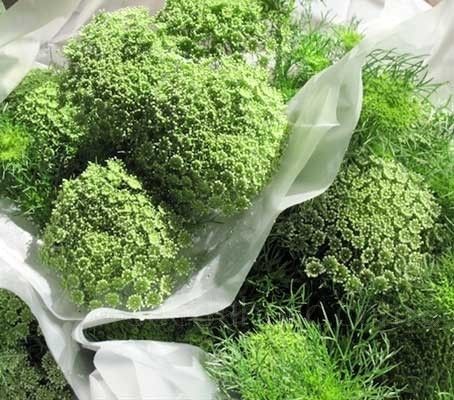
Ammi visnaga ‘Green Mist’ organic seeds produce tall, airy umbels of False Queen Anne’s Lace, ideal for organic cut flower gardens, wildflower meadows, and pollinator-friendly borders. This improved variety, often sold as “Green Mist,” has strong branching stems and large, mounded flower heads that start fresh green and gradually turn soft white as the tiny florets open.
Hardy, reliable, and elegant, Ammi visnaga is perfect for gardeners seeking a naturalistic, meadow-style look, a top trend in modern 2025 garden design. It is also an excellent filler flower for bouquets and wedding arrangements.
Key Features
Plant Type: Annual, non-invasive
Height: 100–120 cm (40–48 in)
Spread: 30–45 cm (12–18 in)
Flower Size: Umbels up to 12 cm (5 in) across
Bloom Time: June to September (sometimes extending into autumn)
Position: Full sun to light/partial shade
Soil: Moist but well-drained; avoid waterlogging
Uses: Cut flowers, dried flowers, borders, meadows, wildlife gardens
Pollinators: Attracts bees, butterflies, and hoverflies
Seed Type: Certified organic, untreated, non-GMO
Ammi visnaga ‘Green Mist’ forms statuesque plants with strong, upright stems and a cloud of lacy, white-green flower heads. The umbels are initially flat and green, giving a misty appearance, then turn whiter as flowering progresses. The intricate, fractal design of the flowers makes them attractive both up close and from a distance.
Why Choose Ammi visnaga ‘Green Mist’?
Perfect Filler Flower: Delicate, textured heads soften bold colors and link other flowers in bouquets and garden borders.
Excellent for Bouquets: Widely used by florists and home arrangers, especially for weddings. The lacy, white umbels look stunning alone or in mixed arrangements.
Long Vase Life: Stems can last up to 10 days when harvested at the right stage.
Pollinator Friendly: Nectar-rich flowers attract bees, butterflies, and other beneficial insects, supporting wildlife-friendly and eco-conscious gardening.
On-Trend Look: Ideal for relaxed, naturalistic planting schemes and wildflower-style borders, trending in 2025.
Organic Seed: Produced according to certified organic standards without chemical treatments, perfect for sustainable gardening.
Organic Seed Information
These seeds are grown and harvested under certified organic standards, free from synthetic chemicals. Supplied naturally, they are ideal for low-input, wildlife-friendly, and eco-conscious gardens.
Sowing Instructions
When to Sow
Outdoors (Direct):
Spring: March to May
Late Summer / Early Autumn: Late August to September (often yields larger, more prolific plants)
Indoors:
Sow 6–8 weeks before planting out after the last frost.
Plants flower in ~100–110 days.
For continuous summer blooms, sow small batches from March to early June.
Sowing Indoors (Pots or Trays)
Handle seedlings carefully; Ammi develops a long taproot.
Fill pots/modules with quality seed compost.
Surface sow seeds, lightly cover (~1 mm / 1/8 in) with compost or vermiculite.
Keep at 18–22°C (64–72°F) with consistent moisture. Germination: 7–21 days.
Transplant seedlings when first true leaves appear, avoiding taproot damage.
Harden off and plant outside after frost danger passes, spacing 20–30 cm (8–12 in).
Direct Sowing Outdoors
Prepare a fine, weed-free seedbed in full sun or light shade.
Sow thinly in shallow drills (~1 mm / 1/8 in deep), 30 cm (12 in) apart.
Lightly cover seeds and water gently.
Keep soil moist during germination and early growth.
Thin seedlings to 20–30 cm (8–12 in) apart for proper branching.
Adaptable to various soils (not waterlogged). Rich soils yield taller plants; drier soils yield finer, shorter plants.
Growing & Care
Light: Best in full sun; tolerates light/partial shade.
Water: Keep moderately moist; avoid waterlogging.
Feeding: Usually unnecessary in fertile soil; avoid excess nitrogen.
Support: Stake plants in windy areas when ~10 cm (4 in) tall.
Self-Seeding: Allow some seed heads to mature for natural reseeding next year.
Cutting & Drying Flowers
Fresh Cut Flowers:
Harvest in the morning, fully hydrated.
Choose stems with ~80% florets open.
Place in clean water with floral preservative. Lasts up to 10 days in vase.
Dried Flowers:
Harvest fully formed umbels.
Hang upside down in a dark, dry, ventilated space for 2–3 weeks.
Ideal for everlasting arrangements, wreaths, and craft projects.
Wildlife & Garden Uses
Ammi visnaga ‘Green Mist’ is ideal for pollinator-friendly and wildlife gardens:
Umbels provide landing platforms and nectar for bees, butterflies, and hoverflies.
Attracts beneficial insects for natural pest control.
Suitable for:
Beds and borders
City and courtyard gardens
Cottage-style and informal plantings
Mediterranean/gravel gardens
Wildflower meadows
Dedicated cut flower patches
Pairs beautifully with taller plants like cannas, foxgloves, and dahlias for layered, dynamic garden design.
Traditional & Medicinal Background
Known as Khella, Ammi visnaga has historical use in Ancient Egypt and the Middle East for urinary tract issues. Seeds contain khellin and visnagin. For educational purposes only – not medical advice.
Safety & Handling
Contains photoactive compounds; may cause sun-sensitive skin reactions.
Wear gloves and long sleeves when handling many stems.
Wash exposed skin immediately; avoid strong sun exposure.
Botanical & Naming Notes
Botanical Name: Ammi visnaga
Family: Apiaceae (Carrot family)
Common Names: Greater Ammi, False Queen Anne’s Lace, Laceflower, Bishop’s Flower, Bullwort, Picktooth, Honeyplant, Spanish toothpick, Khella
Origin: Nile Delta, North Africa; now cultivated globally
“Green Mist” is an ornamental selection with strong stems and large, mounded umbels, distinct from wild carrot (Queen Anne’s Lace).