
Code: 1015
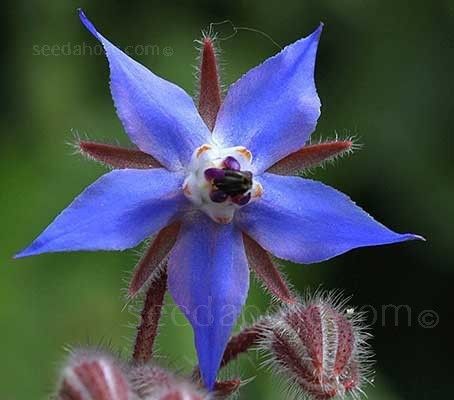
Blue flowers are always welcome in the garden, and borage (Borago officinalis) is one of the most reliable blue bloomers. It often flowers abundantly about eight weeks after sowing and can continue producing blooms until the first hard frosts. Borage thrives in full sun—where it tends to be more compact—but it will tolerate partial sun as well. Although the primary flowering window is usually June to September, many plants extend that period in mild seasons.
Borage tolerates a wide range of soils as long as they drain well; it prefers soil that stays moderately moist through the growing season. Because of its long taproot, borage does not suit container culture well and establishes best when sown direct or transplanted carefully.
Why gardeners plant borage
Borage is invaluable for pollinator-friendly gardens. Its star-shaped blue flowers produce abundant nectar and pollen, making it a magnet for bees, bumblebees, and other beneficial insects—so it’s an excellent choice for wildlife gardens and for boosting pollination of crops. Planting borage near strawberries, tomatoes, beans, and peas can improve pollinator activity and may help deter some pests.
Flights of Fancy HBC
+1
Culinary uses & tradition
Both borage flowers and young leaves are edible. The flowers have a sweet, honey-like flavor and a subtle cucumber note, and they’re commonly used to decorate desserts, salads, and cocktails (Pimm’s Cup is a classic example). In many European cuisines borage is used in soups and regional dishes such as German Grüne Soße and Ligurian ravioli fillings.
Food52
+1
Medicinal & nutritional notes
Borage seed oil (often sold as “starflower oil”) is a rich natural source of gamma-linolenic acid (GLA)—an omega-6 fatty acid used in supplements and researched for anti-inflammatory benefits. Borage seed oil typically contains a substantial percentage of GLA and is marketed for conditions such as skin inflammation and PMS; processed oils are often tested and refined for supplement use.
Wikipedia
+1
Important safety note (Pyrrolizidine alkaloids — PAs):
Borage contains low levels of pyrrolizidine alkaloids (PAs) in leaves and flowers. PAs are plant compounds that can cause liver toxicity if consumed in large amounts or over long periods. Because of this, many health authorities and recent reviews call for caution with edible flowers and flower-derived products; commercially sold borage oils are often processed to reduce PA levels, and reputable supplements are third-party tested for “PA-free” or low-PA content. Use flowers as an occasional garnish and avoid large-quantity or long-term unsupervised internal use without quality-tested products or professional advice.
ScienceDirect
+1
Organic seed & production
This seed is organically produced: harvested from plants grown to recognized organic standards without chemical treatments. Seeds are supplied untreated in their natural state and are certified organic.
How to sow & grow borage
Sowing indoors (optional):
Sow January–February (4–8 weeks before transplanting).
Sow very shallowly—about 1.5 mm (1/16 in) deep—in good seed compost. Keep the compost moist (not waterlogged). Cover trays with a polythene bag for humidity.
Germination typically takes 5–21 days at ~21°C (70°F).
When seedlings are large enough to handle, transplant into larger boxes 5 cm (2 in) apart. Harden off gradually over 10–15 days before planting out after all risk of frost. Space plants ≈15 cm (6 in) apart in the garden. Handle young plants carefully because the taproot is long and sensitive.
Better Homes & Gardens
Sowing direct (recommended):
Sow March–April once soil is warming.
Prepare a well-drained bed, mark the sowing area, and sow ≈3 mm (1/8 in) deep.
Space seeds so final plants sit 10–15 cm (4–6 in) apart. Water in thoroughly.
Seedlings establish quickly; thin or transplant as needed. Keep soil moist during dry periods.
Better Homes & Gardens
Care & notes
Not suited to most containers (long taproot).
Cut back spent plants to encourage further growth or allow self-seeding in mixed beds.
Use gloves if you have sensitive skin—fresh borage leaves have prickly hairs that may irritate some people.
Better Homes & Gardens
Companion planting & soil benefits
Borage is a great companion plant: it attracts pollinators that help nearby crops, and it can act as a sacrificial plant for pests (attracting aphids away from vegetables). As a green manure, its long roots mine subsoil nutrients—plants can be dug in before flowering to return nutrients to the topsoil.
Borage honey & commercial production
When grown widely (fields of borage), beekeepers can produce a light, delicate borage honey prized for its subtle aroma. Borage is also cultivated commercially for its seeds and seed oil; farmers sometimes coordinate with beekeepers for mutual benefit.
Wikipedia