
Code: 1021
Description:
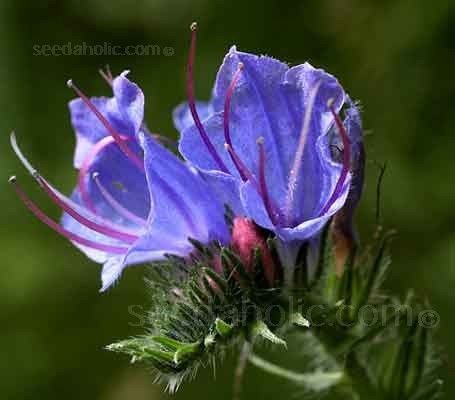
Echium vulgare, commonly known as Viper’s Bugloss, is a striking biennial wildflower that stands out for its vibrant blue blooms, pollinator-friendly nature, and ecological value. Native to Europe and Western Asia, it has naturalized widely across temperate regions, thriving in dry grasslands, meadows, and roadside habitats.
This hardy species produces tall spikes of intensely blue to violet flowers, often tinged with pink or purple, from late spring to early autumn. Its name, Viper’s Bugloss, comes from the seed’s resemblance to a snake’s head and the plant’s historical use as a folk remedy for snake bites.
More than just an eye-catching plant, Echium vulgare plays a vital role in sustainable landscaping, pollinator conservation, and natural soil restoration — making it a must-have for eco-conscious gardeners and environmental educators.
Key Features
- Brilliant Blue Blooms:
Produces dense spikes of vivid blue-violet flowers that add color and texture to gardens and naturalized landscapes. - Pollinator Magnet:
One of the best nectar sources for bees, butterflies, and hoverflies, providing continuous food through the summer months. - Low-Maintenance & Drought-Tolerant:
Thrives in poor, dry, sandy, or rocky soils where few other plants can survive, making it ideal for xeriscaping and eco-gardens. - Eco-Friendly & Sustainable:
Supports biodiversity, stabilizes soil, and enhances ecological balance — perfect for rewilding projects and habitat creation. - Certified Organic Seeds (Code: 1021):
Grown and harvested under strict organic standards, untreated, and non-GMO — ensuring purity and sustainability for gardeners worldwide.
Botanical Information
- Scientific Name: Echium vulgare
- Common Names: Viper’s Bugloss, Blueweed, Blue Thistle
- Family: Boraginaceae
- Type: Biennial wildflower
- Height: 30–90 cm (12–36 in)
- Flower Color: Blue to violet (occasionally pink)
- Bloom Time: Late spring to early autumn
- Foliage: Narrow, bristly green leaves
- Native Range: Europe and Western Asia; naturalized in North America and Australia
Habitat & Ecology
Viper’s Bugloss is a cornerstone species for pollinator conservation. Its tubular flowers are rich in nectar and are especially loved by honeybees, bumblebees, and solitary bees. Studies have shown that Echium nectar contains some of the highest sugar concentrations among wildflowers, making it an essential food source in pollinator networks.
The plant’s deep taproot helps improve soil structure and prevent erosion, while its resilience to drought and poor soil makes it a pioneer species in ecological restoration projects.
Ideal Uses
- Pollinator Gardens:
Essential for bee-friendly and butterfly-attracting landscapes. - Wildflower Meadows & Naturalized Areas:
Adds texture and height to mixed meadows or roadside plantings. - Sustainable Landscaping:
A hardy choice for low-water, low-maintenance designs. - Educational & Conservation Projects:
Perfect for schools, universities, and nature programs promoting native plant ecology.
Sowing & Growing Instructions
When to Sow:
Outdoors: Late spring to early autumn
Indoors (for transplanting): 6–8 weeks before the last frost
How to Sow:
- Scatter seeds directly on bare soil or prepared beds.
- Lightly press them into the surface — do not cover deeply, as light aids germination.
- Keep moist until germination (typically 10–21 days).
- Thin seedlings to 30–40 cm (12–16 in) spacing.
Growing Conditions:
Soil: Well-drained, sandy, or rocky soil (pH 6.0–7.5)
Light: Full sun (minimum 6 hours/day)
Water: Low to moderate; drought-tolerant once established
Maintenance Tips:
- Minimal care required once mature.
- Remove spent flowers to extend blooming.
- Reseeds naturally — for controlled growth, deadhead before seed set.
Cultivation & Landscape Integration
Echium vulgare fits beautifully into native planting schemes, cottage gardens, and wildlife corridors. It can be combined with other drought-tolerant species such as Achillea millefolium (Yarrow), Verbascum spp. (Mullein), or Lavandula angustifolia (Lavender) to create resilient and visually dynamic plant communities.
In urban green projects, it contributes to pollinator pathways and improves urban biodiversity. Its deep-rooting system aids in soil aeration and nutrient cycling, making it a practical component of regenerative landscaping.
Medicinal & Historical Notes (Educational Purpose Only)
Historically, Viper’s Bugloss was used in traditional herbal medicine as a mild anti-inflammatory and respiratory aid. Ancient herbalists believed its spotted stems resembled a snake’s skin and therefore used it for snakebites — a reflection of the “Doctrine of Signatures.”
Today, the plant is valued mainly for its ecological importance, not for direct human consumption. The seeds, however, contain gamma-linolenic acid (GLA) — the same beneficial fatty acid found in Evening Primrose and Borage oils.
⚠️ Caution: Echium vulgare contains pyrrolizidine alkaloids, which can be toxic if ingested in large quantities. It should not be used internally without expert guidance.
Environmental Benefits
- Pollinator Support:
A primary nectar source during dry summers when few flowers bloom. - Erosion Control:
Strong root systems stabilize sandy soils and slopes. - Biodiversity Enhancement:
Encourages a balanced ecosystem by attracting beneficial insects. - Climate Resilience:
Adapted to heat and drought — a future-proof choice for changing climates.
Organic Certification & Seed Integrity
Our Echium vulgare seeds (Code: 1021) are certified organic under international standards for ecological farming. They are:
- 100% Non-GMO and untreated
- Produced without synthetic fertilizers or pesticides
- Tested for high germination rates
- Packaged with the official organic symbol
- This ensures ethical, environmentally responsible production — from seed to bloom.
Conservation & Sustainability Notes
In some regions, wild populations of Echium vulgare have declined due to habitat loss and intensive agriculture. Growing this species in home gardens or restoration areas helps maintain genetic diversity and supports pollinator health.
Gardeners are encouraged to grow native or naturalized strains suitable for their region and to avoid spreading non-native varieties in sensitive habitats.
Conclusion
Echium vulgare (Viper’s Bugloss) is far more than a beautiful wildflower — it’s a symbol of resilience, biodiversity, and natural harmony. Its blue spires light up landscapes, nourish pollinators, and enrich ecosystems — all with minimal human effort.
Whether you’re cultivating a wildflower meadow, enhancing urban biodiversity, or teaching about native ecology, this organic seed offers a perfect blend of beauty, purpose, and sustainability.