
Code: 1028
Description:
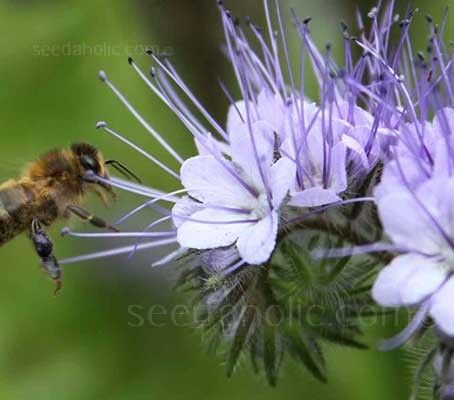
Phacelia tanacetifolia, commonly known as Lacy Phacelia or Tansy Phacelia, is a hardy annual plant native to the southwestern United States and northern Mexico. Renowned for its striking lavender-blue flowers and fern-like foliage, it serves multiple ecological and agricultural purposes, including attracting pollinators, improving soil health, and enhancing biodiversity.
Botanical Information:
- Highly attractive to pollinators: Exceptional nectar and pollen source for honeybees and native pollinators.
- Fast-growing green manure: Improves soil fertility, suppresses weeds, and adds organic matter.
- Beneficial insect magnet: Attracts hoverflies that naturally help control aphids and crop pests.
- Drought-tolerant and cold-hardy: Germinates even in cool conditions and thrives in most soils.
- Excellent cut flower: Strong stems and long vase life make it a floral favorite.
Ecological and Agricultural Benefits
Pollinator Attraction
Phacelia tanacetifolia is highly attractive to a variety of pollinators, including honeybees, bumblebees, solitary bees, and hoverflies. Its abundant nectar and pollen provide essential food sources, supporting pollination services crucial for both wild ecosystems and agricultural productivity. Studies have shown that each flower can produce over 0.5 mg of sugar, a notable amount compared to many other flower species
Soil Improvement and Green Manure
As a green manure, Phacelia tanacetifolia offers significant soil health benefits. Its extensive root system helps to break up compacted soils, improving soil structure and water infiltration. Additionally, when incorporated into the soil, decomposing Phacelia biomass adds organic matter, enhancing soil fertility and microbial activity
Honey Production
Phacelia is among the top 20 honey-producing plants, with studies indicating that a hectare can yield between 500 and 1,200 kg of honey. The honey produced is light-colored, with a mild, pleasant flavor and slow crystallization, making it highly valued in the apiculture industry
Cultivation and Care
Sowing Instructions
- When to Sow: From March through late September — can be used in crop rotations or between plantings.
- How to Sow: Prepare soil by removing weeds and lightly raking the surface. Scatter seeds thinly at about 1g per m² (25g covers 25 m²). Cover seeds with 1 cm (½ inch) of soil and water lightly.
- Germination: 6–21 days depending on temperature.
- Flowering Time: 6–8 weeks after sowing, lasting up to 8 weeks.
Cultivation Tips
- Tolerates most soils and weather conditions.
- To prevent self-seeding, cut back or dig in before flowering when using as green manure.
- As a pollinator plant, allow a few clusters to bloom near vegetables to attract bees.
- Wear gloves when handling — some sensitive individuals may develop mild skin irritation.
Fun Fact & Etymology
The name Phacelia comes from the Greek “phakelos,” meaning “bundle” or “cluster,” referring to the tightly coiled arrangement of its flower heads. The species epithet tanacetifolia means “with leaves like Tansy,” describing its lace-like foliage.
Conclusion
Phacelia tanacetifolia is a versatile and beneficial plant that supports pollinator populations, enhances soil health, and contributes to honey production. Its adaptability and ecological benefits make it an excellent choice for gardeners and farmers aiming to promote biodiversity and sustainable practices.