
code: 1201
Common Name: horn-of-plenty
Type: Herbaceous perennial
Family: Solanaceae
Native Range: Southwestern China
Zone: 9 to 10
Height: 3.00 to 4.00 feet
Spread: 3.00 to 4.00 feet
Bloom Time: July to frost
Bloom Description: White, yellow, lilac and purple
Sun: Full sun
Water: Medium
Maintenance: Low
Suggested Use: Annual
Flower: Showy, Fragrant
Leaf: Fragrant
Tolerate: Drought
Culture
Winter hardy to USDA Zone 9-10. In St. Louis it is grown as an annual. In the ground, plants do best in rich, humusy, well-drained loams in full sun with regular moisture. Purchase plants from nurseries in spring or start seeds indoors about 6-8 weeks before last spring frost. Set plants out after last frost date. Plants tend to sprawl, and are best spaced about 3’ apart unless staking or other support will be used. Deadheading flowers is not necessary. Harvest ripe seed for planting in the following spring. Self-seeding may occur in the St. Louis area even though plants are not winter hardy. Container plants may be cut back and overwintered indoors in a sunny window.
Noteworthy Characteristics
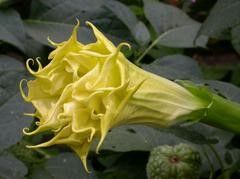
Datura metel, commonly called horn of plenty, devil’s trumpet, angel’s trumpet or thornapple, is native to southern China. It is a shrubby, sprawling, short-lived, tender perennial that is grown in St. Louis as an annual. It grows 3-4’ tall and spreads to as much as 4’ wide. Ovate, wavy-toothed, dark green leaves (to 8” long). Foliage emits a disagreeable odor when bruised or crushed. Single or double, upward-facing trumpets (to 7” long and 4” wide at the mouth) have a sweetly overpowering fragrance. Flowers come in a variety of colors, including white, yellow, lilac and dark purple. Each flowers lasts only one night. From an unusual cigar-shaped flower bud, each flower will unravel in the evening to reveal a fragrant trumpet-shaped bloom that only lasts until noon the following day. Flowers will typically bloom intermittently from mid-summer to frost. Flowers are followed by thorny, spherical fruit. Plants belong to the nightshade family and all parts are extremely toxic. Datura is similar to Brugmansia, except the trumpets of the latter are larger, last for several days and droop downward. Nomenclature for plants in the genus Datura is confusing.
Genus name comes from an Indian vernacular name.
Problems
No serious insect or disease problems. Watch for whiteflies, mealy bugs and spider mites.
Uses
Borders, containers. Specimen or group. Place containers near patios so flower fragrance may be enjoyed.