
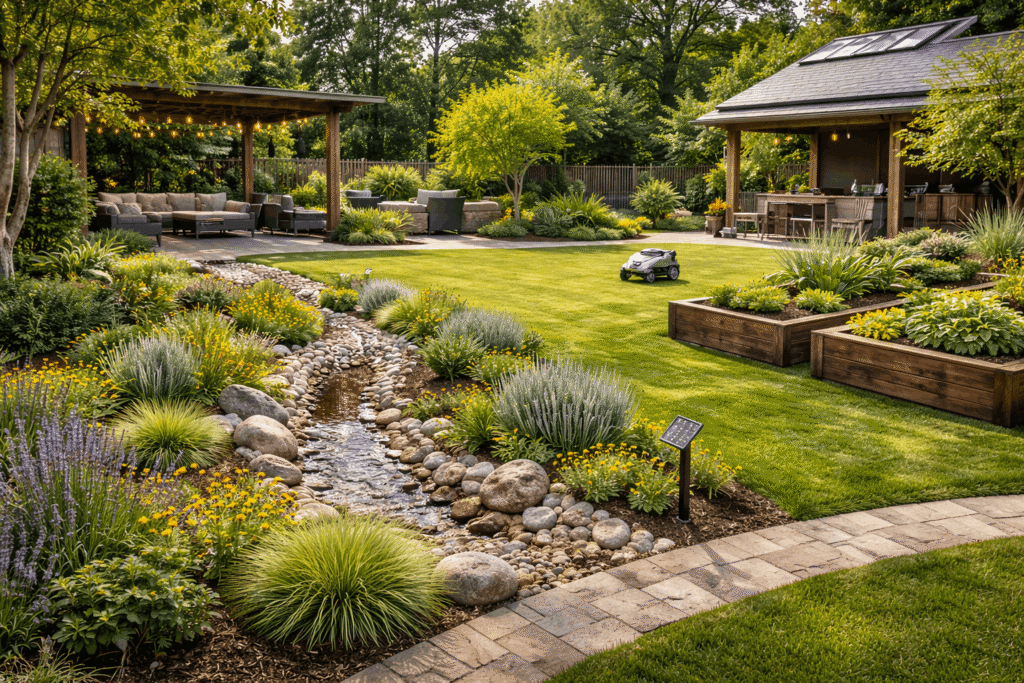
Landscaping has come a long way. What was once simply a way to beautify outdoor spaces has transformed into a complex, multifaceted approach to sustainability, technology, and wellness. In 2025, smart landscaping is at the forefront, combining high-tech solutions, eco-friendly practices, and design principles that maximize functionality, aesthetics, and environmental benefits. This guide will explore the latest landscaping trends, from robotic lawn care to vertical gardens, outdoor wellness zones, and climate-resilient strategies—all optimized for modern living. Whether you’re a homeowner, landscape professional, or gardening enthusiast, this comprehensive guide is designed to inspire and inform.
1. Sustainable Landscaping Practices: Eco-Friendly Gardens for 2025
Sustainability is no longer optional; it is essential. Modern homeowners and landscape designers are increasingly focused on eco-friendly landscaping practices that conserve resources, promote biodiversity, and reduce environmental impact.
Native Planting
Native plants are the backbone of sustainable landscaping. By choosing species adapted to your region, you reduce water usage, minimize fertilizer needs, and create natural habitats for pollinators such as bees, butterflies, and birds. Examples include Echinacea, Lavandula (Lavender), and Rudbeckia.
Water Conservation Techniques
Water is one of the most precious resources in gardening. Smart irrigation systems and xeriscaping techniques allow you to design drought-tolerant landscapes that thrive with minimal water. Implementing rainwater harvesting and drip irrigation can save thousands of gallons annually.
Soil Health and Fertilization
Healthy soil is the foundation of any successful landscape. Using organic compost, natural mulches, and slow-release fertilizers improves soil structure, encourages beneficial microorganisms, and reduces reliance on chemical inputs. Rotating cover crops like clover or Phacelia tanacetifolia can naturally enhance soil fertility.
SEO Keywords: sustainable landscaping, eco-friendly gardens, native plants, water conservation gardening, organic fertilizers, soil health.
2. Smart Landscaping Technologies: Tech-Integrated Gardens
Technology is transforming outdoor spaces into smart landscapes. These innovations improve efficiency, convenience, and aesthetics.
Automated Irrigation Systems
Smart irrigation controllers adjust watering schedules based on weather, soil moisture, and plant type. Sensors detect dry soil and automatically activate watering, ensuring plants receive optimal hydration while conserving water.
Robotic Lawn Care
Robotic lawnmowers, powered by AI and GPS technology, maintain perfectly trimmed lawns with minimal effort. They navigate complex landscapes, avoid obstacles, and adapt to uneven terrain, providing a pristine look without daily labor.
Smart Landscape Lighting
LED and solar-powered lighting, controlled remotely via smartphones or voice assistants, allow you to enhance ambiance, highlight garden features, and improve nighttime security. Motion sensors and energy-efficient designs minimize energy consumption.
SEO Keywords: smart landscaping, automated irrigation, robotic lawn care, smart landscape lighting, technology in gardening.
3. Vertical Gardens and Green Walls: Maximizing Space
Vertical gardens are no longer just a decorative statement—they are functional, eco-friendly, and space-efficient.
Design Ideas
Install living walls on patios, balconies, or office buildings to introduce greenery where horizontal space is limited. Popular options include succulents, ferns, herbs, and flowering plants like Ruta graveolens (Rue).
Benefits
- Improve air quality by filtering pollutants.
- Provide insulation and reduce energy costs.
- Offer visual interest and elevate aesthetics.
Maintenance Tips
Regular watering via drip systems, pruning, and plant rotation ensure longevity and vibrancy.
SEO Keywords: vertical gardens, green walls, space-saving landscaping, living walls, eco-friendly gardens.
4. Outdoor Living Spaces: Multi-Functional Gardens
Outdoor areas are no longer just “yards”—they are extensions of indoor living, combining style, comfort, and functionality.
Patios and Decks
Material choices such as natural stone, composite wood, and eco-friendly concrete are trending. Incorporating modular furniture allows for flexible layouts.
Outdoor Kitchens and Fire Pits
Outdoor kitchens enhance entertainment spaces, while fire pits provide warmth and ambiance. Combining these elements encourages year-round use.
Water Features
Small ponds, fountains, or artificial streams improve mood, support local wildlife, and create soothing soundscapes.
SEO Keywords: outdoor living spaces, backyard design, multi-functional gardens, outdoor kitchens, fire pits.
5. Climate-Resilient Landscaping: Preparing for the Future
With climate change affecting weather patterns, resilient landscaping is critical.
Drought-Resistant Plants
Species like Pennyroyal (Mentha pulegium) and Papaver rhoeas (Common Poppy) thrive in low-water conditions.
Heat Management
Planting shade trees and using reflective materials can reduce urban heat islands and lower surrounding temperatures.
Stormwater Management
Rain gardens and permeable pavements manage runoff, prevent soil erosion, and improve water quality.
SEO Keywords: climate-resilient landscaping, drought-resistant plants, stormwater management, heat management gardening.
6. Wellness and Therapeutic Gardens: Mindful Spaces
Gardens are increasingly designed to promote health and well-being. Therapeutic landscapes reduce stress, improve focus, and encourage outdoor activity.
Design Principles
Incorporate natural materials, water features, aromatic herbs, and comfortable seating areas. Use soft colors and gentle curves to create a calming environment.
Therapeutic Benefits
Gardens for yoga, meditation, or casual relaxation provide physical and mental health benefits. Exposure to greenery reduces stress and enhances overall well-being.
SEO Keywords: wellness gardens, therapeutic landscapes, mindful gardening, stress-relief gardens.
7. Edible Landscaping: Beauty and Function Combined
Edible landscaping is gaining popularity among eco-conscious gardeners. Combining aesthetics and productivity, these gardens include fruits, vegetables, and herbs integrated into decorative designs.
Permaculture Principles
- Design gardens that are self-sustaining, with companion planting and natural pest control methods.
- Community and Urban Gardens
- Urban spaces can grow fresh produce, foster community engagement, and improve food security.
SEO Keywords: edible landscaping, permaculture gardening, urban gardens, vegetable gardens.
8. Urban Greening and Smart Cities
Urban landscaping is transforming cities into green, sustainable environments.
Green Roofs
Green roofs reduce energy costs, manage stormwater, and support biodiversity.
Street Trees
Planting street trees improves air quality, provides shade, and enhances city aesthetics.
Community Engagement
Residents participate in tree planting, pollinator-friendly gardens, and educational initiatives.
SEO Keywords: urban greening, green roofs, street trees, sustainable city landscapes.
9. Emerging Technologies in Landscaping
AI, drones, and IoT devices are reshaping landscape design and maintenance.
Drones
Aerial mapping and monitoring streamline large-scale landscape projects.
Smart Sensors
Soil, humidity, and light sensors provide data to optimize plant growth.
Data-Driven Design
Advanced software predicts plant health, maintenance needs, and landscape aesthetics.
SEO Keywords: AI landscaping, drones in gardening, smart sensors, IoT landscaping technology.
10. Global Design Trends: Inspiration from Around the World
- Gardening trends are influenced by international design philosophies.
- Japanese Wabi-Sabi: Embrace imperfection and natural cycles.
- Mediterranean Gardens: Combine drought-tolerant plants and vibrant colors.
- European Cottage Style: Dense flower borders, pathways, and pollinator habitats.
SEO Keywords: global landscaping trends, Wabi-Sabi gardens, Mediterranean garden design, cottage gardens.
Conclusion: Smart Landscaping as the Future
The landscaping trends of 2025 emphasize technology, sustainability, and wellness. Smart irrigation, robotic lawn care, vertical gardens, and climate-resilient designs are changing how we approach outdoor spaces. By adopting these strategies, homeowners can create gardens that are beautiful, sustainable, and functional—enhancing both property value and quality of life. Whether you’re a professional landscaper or a gardening enthusiast, integrating smart landscaping principles is the key to creating modern, eco-friendly outdoor spaces.