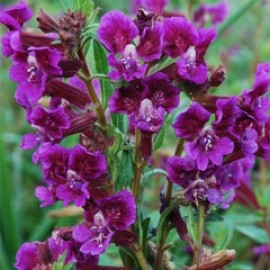
Ornamental plants

« Ornamental Plants »

Definition of Ornamental Plants:
Plants grow all over the world in different sizes, shapes and appearance. Some provides us with food, shelter or building materials, while others provide us with only visual delight. Ornamental Plants are also referred to as garden plants has beauty as its main trait. They are usually grown in the flower garden for the display of their flowers.It is a plant primarily grown for its beauty either for screening,accent, specimen, color or aesthetic reasons. Common ornamental features include leaves, scent, fruit, stem and bark.

History of Ornamental Plants:
The history of ornamental gardening started at least 4,000 years of human civilization.Egyptian tomb paintings of the 1500 BC are some of the earliest physical evidence of ornamental horticulture and landscape design.It depicts depict lotus ponds surrounded by symmetrical rows of acacias and palms.
Ornamentals, in horticulture, include both woody and herbaceous plants used primarily as amenities.

Important countries producing and consuming flowers and plants:
1- Netherlands 2- Italy 3- Germany 4- Switzerland 5- Denmark 6- Belgium 7- Sweden 8- Japan 9 – England 10- Australia 11- France 12- Spain 13- USA
As can be seen, the Netherlands ranks first among all countries and the rest of the countries are next.

In terms of consumption position, ornamental flowers are divided into three categories:
Annual Plants:
Ornamental plants used as flowers in the green space. These plants are usually not cold tolerant and have a relatively short life span. Like petunia and sage.

Perennial Plants:
Plants that can grow in the open for more than a year. Such as: chrysanthemums and permanent lilies.

INDOOR PLANTS:
Plants that can be stored only in the limited space of apartments and greenhouses. Like fig leaves and photos.

The effect of flowers and plants on the human psyche:
Research shows that buying flowers, planting flowers and plants, and looking at flowers in general evoke feelings of happiness, peace and freshness, positive thinking, and avoidance of sadness.

The color of the flowers is very important. Flowers with soft colors such as pink, white and purple, lead a person to calm emotions, and flowers with warm and bright colors such as red, yellow and orange, move the human sense to excitement and vitality.

The Canadian Ornamental Plants:
The Canadian Ornamental Plant Foundation was chartered by the federal government in 1964 to promote selection, testing and distribution of better ornamental plant cultivars. The procedures have provided breeders of new cultivars with the means of getting worthwhile new introductions into trade and, thence, to the general public. Much research into the development of cold-hardy plants takes place at Agriculture Canada Research Stations across the country. Successes include a cultivar of Alstroemeria, a member of the amaryllis family, developed at the Saanichton Research and Plant Quarantine Station, BC; Northline (a silver maple), Autumn Blaze (a white ash), Wascana (a hybrid linden) and Baron (a box elder), all developed at the Morden Research Station, Manitoba, for prairie use; and 2 new winter-hardy rose cultivars (Charles Albanel and Champlain), developed at the Ottawa Research Station.

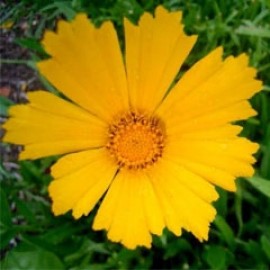
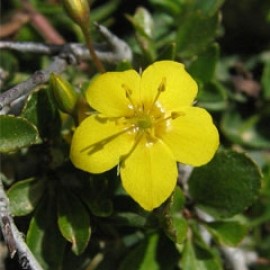
Coreopsis Schnittgold

Coreopsis Schnittgold

code: 734 its fine foliage with lightly hairy stems makings a nice transition between various textures Family: Compositae Common name: Coreopsis ‘Cutting Gold’, Coreopsis auriculata Plant Classification: Hardy perennial Minimum Height: 45 cm Maximum Height: 60 cm Packet Content(approx.): 10 In early summer, single flower heads open, of a vivid golden yellow, each up to

Coreopsis Schnittgold Read More »

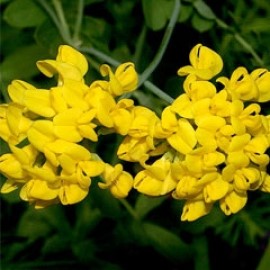
Coronilla Coronata

Coronilla Coronata

code: 732 It is found in Central Europe down to the Balkan peninsula Family: Fabaceae Common name: Scorpion Vetch Plant Classification: Hardy perennial Minimum Height: 23 cm Maximum Height: 38 cm Packet Content(approx.): 12 This unusual herbaceous perennial has compound leaves and bright yellow pea-flowers borne from mid-spring to late summer and could be described

Coronilla Coronata Read More »

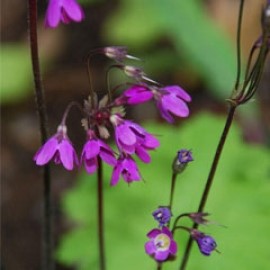
Cortusa Matthioli

Cortusa Matthioli

code: 731 It will do the same in the garden provided Family: Primulaceae Common name: Alpine Bells Minimum Height: 15 cm Maximum Height: 23 cm This delicate, dwarf, and rarely offered primula relative bears umbels of deeply cleft, purple bells on delicate stems in early spring. In the wild it grows in moist damp woodlands

Cortusa Matthioli Read More »

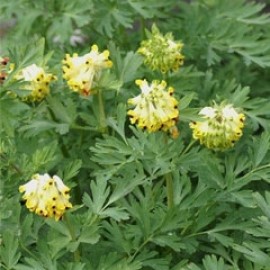
Corydalis Nobilis

Corydalis Nobilis

code: 730 A focal point in the spring garden Family: Papaveraceae Common name: Siberian corydalis Plant Classification: Hardy perennial Minimum Height: 30 cm Maximum Height: 38 cm Packet Content(approx.): 20 Clumps of blue green, dissected, ferny foliage are the perfect backdrop for the clustered primrose yellow, purple-brown tipped flowers that open from huge clusters of

Corydalis Nobilis Read More »

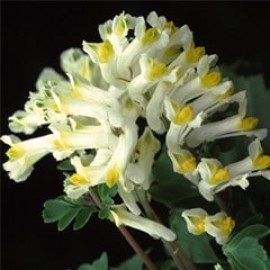
Corydalis Ochroleuca

Corydalis Ochroleuca

code: 729 greenish-yellow and white flowers Family: Papaveraceae Plant Classification: Hardy perennial Maximum Height: 20 cm This lovely compact plant is somewhat similar to Corydalis lutea, but has greyer foliage in spring and for most of the summer, below a long succession of striking, bicoloured, greenish-yellow and white flowers. Sowing advice: Seeds can be sown

Corydalis Ochroleuca Read More »

Lychnis Coronaria 'Angel's Blush'

Lychnis Coronaria ‘Angel’s Blush’

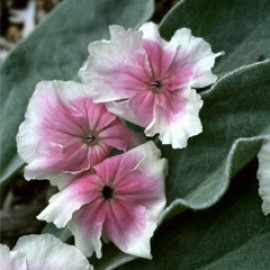
code: 726 A lovely long-lived cottage garden plant Family: Caryophyllaceae Common name: Angel’s Blush Bloody Mary. LYCHNIS CORONARI OCULATA Plant Classification: Hardy perennial Minimum Height: 60 cm Maximum Height: 90 cm The pink-eyed white-flowered form of the woolly, grey-leaved Lychnis coronaria comes quite true from seed but the pink eye varies quite bizarrely with the

Lychnis Coronaria ‘Angel’s Blush’ Read More »

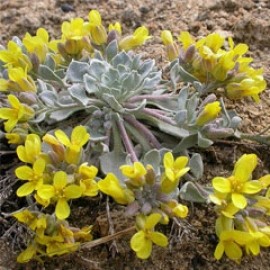
Physaria Didymocarpa

Physaria Didymocarpa

code: 720 including British Columbia and Alberta in Canada Family: Brassicaceae Common name: Common Twinpod Plant Classification: Hardy perennial Minimum Height: 5 cm Maximum Height: 10 cm Packet Content(approx.): 10 This uncommon alpine makes compact rosettes of silver-grey leaves from which radiate several thin, prostrate stems carrying terminal bunches of fragrant yellow flowers. When these

Physaria Didymocarpa Read More »

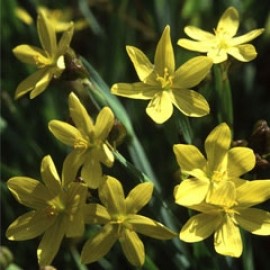
Sisyrinchium Brachypus

Sisyrinchium Brachypus

code: 718 grow thin stems carrying numerous yellow star-like flowers Family: Iridaceae Plant Classification: Hardy perennial Minimum Height: 15 cm Maximum Height: 25 cm From tufts of grass-like leaves grow thin stems carrying numerous yellow star-like flowers. A very welcome self-seeder and colonist which will produce its tiny “irises” where little else will grow, even

Sisyrinchium Brachypus Read More »

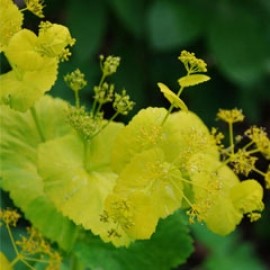
Smyrnium Perfoliatum

Smyrnium Perfoliatum

code: 717 holding umbels of greeny-gold flowers Family: Umbelliferae Plant Classification: Hardy biennial Minimum Height: 60 cm Maximum Height: 90 cm “Perfoliate Alexanders”. Old cottage gardens and flower arrangers have known of this curious plant for ages. The stems, holding umbels of greeny-gold flowers, grow straight through the middles of the shiny leaves, kebab-style. Rarely

Smyrnium Perfoliatum Read More »

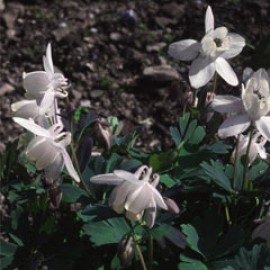
Aquilegia Flabellata Alba

Aquilegia Flabellata Alba

code: 713 It is a very hardy and long-lived plant Family: Ranunculaceae Common name: White Fan Columbine, Granny’s Bonnets Plant Classification: Hardy perennial Minimum Height: 20 cm Maximum Height: 25 cm This outstanding dwarf aquilegia from Japan bears disproportionately large, ivory-white flowers on short dividing stems, all carried just above thick blue-green leaves. It is

Aquilegia Flabellata Alba Read More »

Asclepias Incarnata

Asclepias Incarnata

code: 712 This lovely North American plant is often found growing in damp to wet soils Family: Acanthaceae Common name: Swamp Milkweed, Rose Milkweed, Swamp Silkweed, White Indian Hemp Minimum Height: 60 cm Maximum Height: 1.2 meters The large, bright, terminal blossoms of this showy flower are made up of small, rose-purple flowers which are

Asclepias Incarnata Read More »

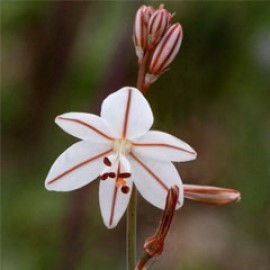
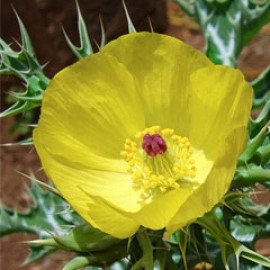
Asphodelus Fistulosus

code: 709 From large tufts of hollow, onion-like Family: Asphodeloideae Common name: Onionweed, Onion-leafed asphodel, Pink asphodel Plant Classification: Half hardy bulb Hardy bulb Half hardy perennial Hardy perennial Minimum Height: 50 cm Maximum Height: 70 cm Packet Content(approx.): 15 From large tufts of hollow, onion-like, rounded leaves arise strong spikes holding starry flowers which

Asphodelus Fistulosus Read More »

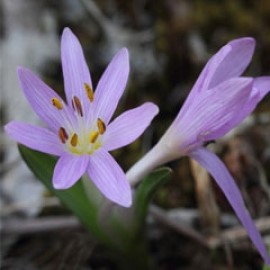
Colchicum Cupani

Colchicum Cupani

code: 708 This attractive dwarf species performs well in a pot Common name: Mediterranean Meadow Saffron Plant Classification: Half hardy bulb Hardy bulb Minimum Height: 10 cm Maximum Height: 15 cm Packet Content(approx.): 10 Pink to purple, untessellated flowers, each with a tiny white star in the throat are produced in abundance in the autumn

Colchicum Cupani Read More »

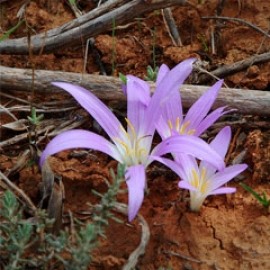
Colchicum Montana

Colchicum Montana

code: 706 It is found in meadows and rocky slopes in Spain Family: Colchicaceae Common name: Merendera montana, Bulbocodium montanum, Sowy Colchicum, False Autum Crocus Plant Classification: Hardy bulb Hardy perennial Minimum Height: 5 cm Maximum Height: 8 cm Packet Content(approx.): 10 One of the most lovely of the “autumn crocuses”, this one has noticeably

Colchicum Montana Read More »

Cuphea 'Regal Purple'

Cuphea ‘Regal Purple’

code: 704 Impressive sprays of dark purple Family: Lythraceae Common name: “Blue Waxweed”, “Bat Face”, “Bunny-Ears” Cuphea viscossissima Plant Classification: Half hardy annual Minimum Height: 38 cm Maximum Height: 45 cm “Blue Waxweed”, “Bat Face”, “Bunny-Ears”. Impressive sprays of dark purple, orchid-like flowers open in progression along strong stems over a very long period from

Cuphea ‘Regal Purple’ Read More »