
code: 528
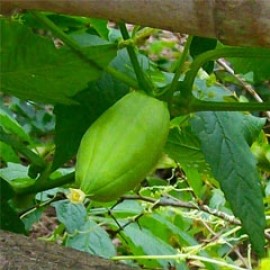
The fully grown but still immature fruits are usually eaten cooked
Family: Cucurbitaceae
Common name: Caigua, Slipper gourd, Lady’s slipper, Sparrow gourd, Stuffing Cucumber
Plant Classification: Greenhouse perennial
Maximum Height: 1.8 meters
Packet Content(approx.): 6 large seeds
Well-known in the tropics and hotter countries, this herbaceous vine is grown for its edible fruit, which is predominantly used as a vegetable. It is known from cultivation only, and its large size, compared to closely related wild species, suggests that it is a fully domesticated crop going back for many centuries, evidence coming from ancient Peruvian ceramics depicting the fruits. The fully grown but still immature fruits are usually eaten cooked, as well as use in salads and pickles.
Sowing advice:
For best results, sow seeds in good light at any time onto a good soil-based compost. Cover the seeds with fine grit or compost to approximately their own depth. We recommend germinating at 15 to 20 degrees C. Seeds should ideally germinate in between 2 and 6 weeks although they make take considerably longer. Pot on seedlings before finally planting out into a container or a well-drained spot.
Cultivation details:
It is a commercially cultivated vegetable. Achocha is a plant of the tropics, where it can be found at elevations up to 3,000 metres. It can also be cultivated in the subtropics and in areas of the temperate zone that have a long, warm growing season of 4 months or more. Requires a very warm, sunny and sheltered position in a rich well-drained soil. The plant is a weed pest in Florida. The first harvest of fruit can take place about 3 months after planting and can then continue for several months. There are many named forms.
Medicinal usage:
A tea made from the seeds is used in the treatment of high blood pressure. The dried and powdered seeds are taken in 1-gram doses as a remedy for intestinal parasites. This sort of treatment is usually followed by a laxative to make sure the parasites are removed from the body. The seeds and/or the fruits are recommended for the treatment of gastrointestinal disorders. The fruits are diuretic. They are boiled in milk and gargled as a treatment for tonsillitis. The fruit juice is recommended as a treatment for conditions such as high blood-cholesterol levels, hypertension, tonsillitis, arteriosclerosis, circulatory problems and diabetes. The fruits and/or the leaves are boiled in olive oil and used externally as a topical anti-inflammatory and analgesic. The leaves are hypoglycaemic and are prepared in a decoction for treating diabetes. Research conducted in Peru has shown that the plant can lower blood-cholesterol levels in humans with one trial showing an 18.3% reduction in 12 months and other trials showing even larger reductions.