
code: 942
The foliage is perfectly described by one of its common names
Family: Ranunculaceae
Common name: Shining Meadow Rue
Plant Classification: Hardy perennial
Maximum Height: 1.8 meters
Packet Content(approx.): 20
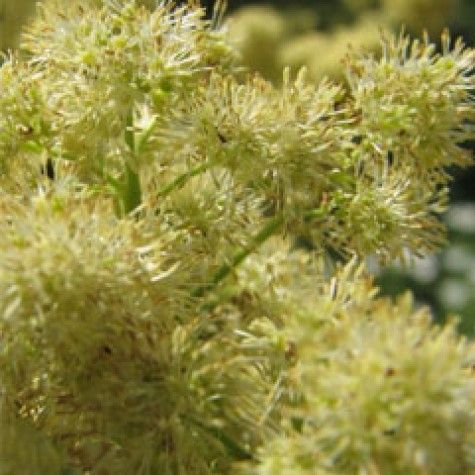
In midsummer this erect, clump-forming plant opens airy heads of soft, fragrant, creamy yellow flowers that are reminiscent of Thalictrum flavum, but have a rose-like perfume! The foliage is perfectly described by one of its common names. “Shining Meadow Rue”, the bright green, fern-like foliage having pointed rather than oval leaves, and is highly polished.
Sowing advice:
Sow seeds IMMEDIATELY you receive them, at any time of the year, they depend on having several months, sometimes up to a year in cold, damp compost, (NOT DRY IN A FRIDGE) before they will germinate. Keep the seed tray moist in a cold greenhouse or shady corner and do not discard. These fresh seeds can be very slow to germinate but do not use any artificial heat in an attempt to germinate them as it may simply disrupt their germination mechanism causing them to enter even deeper dormancy.
Position:
The thalictrums prefer cool places, in semi shade they will grow well in deep soil. If in full sun they will require moist but not wet ground. In open, exposed areas the plants may need to be supported. In areas with severe winters, winter protection is suggested.
Cultivation:
To make sure the plants remain vigorous divide them every two to three years as soon as growth begins in spring. (March to April). Larger divisions can be planted out direct into their permanent positions, though it is best to pot up smaller divisions and grow them on in light shade in a greenhouse or cold frame until they are growing away well. Plant them out in the summer or the following spring.
Plant uses:
Cottage/Informal, Beds and borders. Shaded Gardens
Origin:
Thalictrum lucidum is native to the south-eastern half of Europe and Asia Minor. It grows in moist to wet meadows, floodplain forests or coastal scrub.
The genus of Thalictrum is quite large with between 100 and 200 species. One of the characteristics of the genus that differentiates it from many others in its family, the Ranunculaceae, is that the flowers lack nectar-producing structures (nectaries). Other members of the family without nectaries include Anemone and Clematis, but they remain insect-pollinated, while Thalictrum relies on the wind.
Nomenclature:
The genus name Thalictrum is taken from the Greek thaliktron, a name used to describe a plant with divided leaves, and a name given to the genus by Dioscorides, the Greek physician and pharmacologist who wrote the Materia Medica, which remained the leading pharmacological text for sixteen centuries.
The species name lucidum derives from the Latin adjective lucidus meaning glossy, clear or shining.
Despite their common name of ‘meadow-rue’, Thalictrum species are unrelated to the true rue (family Rutaceae), but resemble its members in having the petiole twice or thrice divided.