
code: 630
It does especially well in waterside environments
Family: Primulaceae
Plant Classification: Hardy perennial
Maximum Height: 45 cm
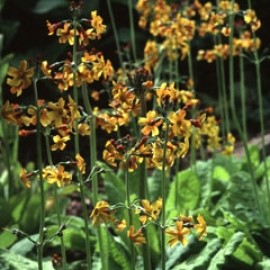
This extremely vigorous and hardy candelabra primula thrusts up numerous strong stems bearing bright orange flowers with darker eyes. It does especially well in waterside environments where it will self-seed generously making fabulous clumps!
Sowing advice:
Primula seeds may be sown at any time onto a loam-based compost, barely cover so that around 50% are still visible. Best germination temperatures are between 10 and 15 degrees C. (e.g. a cool, northerly window sill) PLEASE NOTE: Temperatures exceeding 15 C can prevent germination, and above 20 C expect very little germination as most seeds will go dormant as a protective measure. Germination takes between 3 to 6 weeks, sometimes taking much longer.
Outstanding Qualities:
Candelabra primroses demand attention in shade gardens because of their fragrant, erect, multi-tiered noble blooms. In late spring, Primula bulleyanas dazzling rich orange blooms are borne in tiered flower whorls, 5 to7 per stalk. Its foliage is mid-green, lanced shaped, semi-evergreen with toothed margins to 12 inches. Primula bulleyana are very long-lived and need part shade, rich soil and regular watering. Growing 18 to 24 inches tall, they quickly establish to a good size by self-sowing and look particularly stunning when grown in mass. Primula bulleyana may be semi-deciduous in winter but will return with vigor each spring.
Quick Facts:
Plant Type: perennial
Growth Habit: spreading
Foliage Type: deciduous
Plant Height (10-year): 2 ft. 0 in. (0.61 meters)
Plant Width/Spread (10-year): 2 ft. 0 in. (0.61 meters)
Hardiness: USDA Zones 5 to 8
Flower Color: orange
Flowering Time: spring
Sun/Light Exposure: light to open shade
Water Requirements: if the site is not wet or moist, water frequently
Culture Notes:
This candelabra primrose grows best in open to light shade and protected from hot afternoon sun. Grow in a rich moist to wet soil. This primrose can tolerate sand and clay if the site is moist. Once established it can naturalize, but it is best to start with three to five plants to insure proper pollination and good seed set. Faded flower stems can be removed once the seed has disbursed. In fall cut back any yellowing foliage to tidy up.