Ornamental plants

« Ornamental Plants »

Definition of Ornamental Plants:
Plants grow all over the world in different sizes, shapes and appearance. Some provides us with food, shelter or building materials, while others provide us with only visual delight. Ornamental Plants are also referred to as garden plants has beauty as its main trait. They are usually grown in the flower garden for the display of their flowers.It is a plant primarily grown for its beauty either for screening,accent, specimen, color or aesthetic reasons. Common ornamental features include leaves, scent, fruit, stem and bark.

History of Ornamental Plants:
The history of ornamental gardening started at least 4,000 years of human civilization.Egyptian tomb paintings of the 1500 BC are some of the earliest physical evidence of ornamental horticulture and landscape design.It depicts depict lotus ponds surrounded by symmetrical rows of acacias and palms.
Ornamentals, in horticulture, include both woody and herbaceous plants used primarily as amenities.

Important countries producing and consuming flowers and plants:
1- Netherlands 2- Italy 3- Germany 4- Switzerland 5- Denmark 6- Belgium 7- Sweden 8- Japan 9 – England 10- Australia 11- France 12- Spain 13- USA
As can be seen, the Netherlands ranks first among all countries and the rest of the countries are next.

In terms of consumption position, ornamental flowers are divided into three categories:
Annual Plants:
Ornamental plants used as flowers in the green space. These plants are usually not cold tolerant and have a relatively short life span. Like petunia and sage.

Perennial Plants:
Plants that can grow in the open for more than a year. Such as: chrysanthemums and permanent lilies.

INDOOR PLANTS:
Plants that can be stored only in the limited space of apartments and greenhouses. Like fig leaves and photos.

The effect of flowers and plants on the human psyche:
Research shows that buying flowers, planting flowers and plants, and looking at flowers in general evoke feelings of happiness, peace and freshness, positive thinking, and avoidance of sadness.

The color of the flowers is very important. Flowers with soft colors such as pink, white and purple, lead a person to calm emotions, and flowers with warm and bright colors such as red, yellow and orange, move the human sense to excitement and vitality.

The Canadian Ornamental Plants:
The Canadian Ornamental Plant Foundation was chartered by the federal government in 1964 to promote selection, testing and distribution of better ornamental plant cultivars. The procedures have provided breeders of new cultivars with the means of getting worthwhile new introductions into trade and, thence, to the general public. Much research into the development of cold-hardy plants takes place at Agriculture Canada Research Stations across the country. Successes include a cultivar of Alstroemeria, a member of the amaryllis family, developed at the Saanichton Research and Plant Quarantine Station, BC; Northline (a silver maple), Autumn Blaze (a white ash), Wascana (a hybrid linden) and Baron (a box elder), all developed at the Morden Research Station, Manitoba, for prairie use; and 2 new winter-hardy rose cultivars (Charles Albanel and Champlain), developed at the Ottawa Research Station.

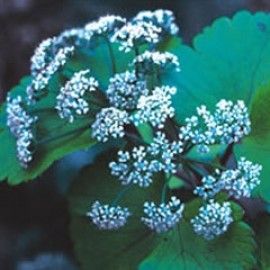
Ligusticum Scoticum

Ligusticum Scoticum

code: 897 sow seeds immediately onto a good soil-based compost Family: Umbelliferae Common name: Scottish Licorice-root, Scottish Lovage Plant Classification: Hardy perennial Minimum Height: 60 cm Maximum Height: 90 cm Packet Content(approx.): 20 We acquired this plant resembling an extremely lovely dwarf angelica some years ago, and called it Angelica ‘Summer Delight’ but have finally […]

Ligusticum Scoticum Read More »

Lilium Carniolicum

Lilium Carniolicum

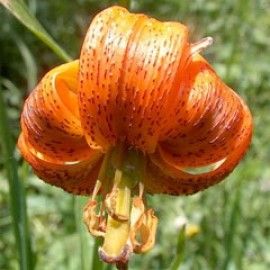
code: 895 A justifiably popular native of former Yugoslavia and the Slovenian Alps Family: Liliaceae Plant Classification: Hardy bulb Hardy perennial Minimum Height: 60 cm Maximum Height: 90 cm Packet Content(approx.): 10 Spikes of richly-coloured, soft yellow-orange to tangerine turkscap flowers open on shortish crystal-frosted stems in July. This beauty is easily grown in a

Lilium Carniolicum Read More »

Silene Bellidioides

Silene Bellidioides

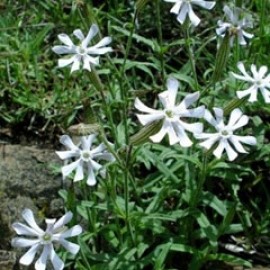
code: 893 Sourced from the damp coastal areas of South Africa Family: Caryophyllaceae Plant Classification: Hardy perennial Minimum Height: 15 cm Maximum Height: 23 cm This scarce and diminutive plant with a rosette of daisy-like foliage forms low, spreading stems carrying white flowers with prominently inflated pouches. Sourced from the damp coastal areas of South

Silene Bellidioides Read More »

Anomatheca Laxa Joan Evans (Freesia/Lapeirousia)

Anomatheca Laxa Joan Evans (Freesia/Lapeirousia)

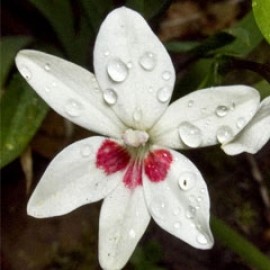
code: 892 It bulks up quite readily whether in a scree or a pot Family: Iridaceae Common name: Freesia Joan Evans, Lapeirousia Joan Evans Plant Classification: Half hardy bulb Hardy bulb Minimum Height: 15 cm Maximum Height: 20 cm Packet Content(approx.): 15 This tiny bulbous plant, now sometimes called Freesia and once known as Laperousia,

Anomatheca Laxa Joan Evans (Freesia/Lapeirousia) Read More »

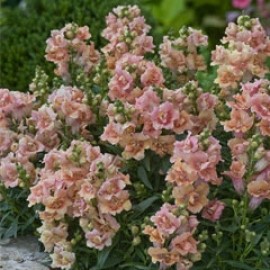
Antirrhinum Dwarf Twinny Peach

Antirrhinum Dwarf Twinny Peach

code: 888 Its tolerance to hot and wet weather conditions results Family: Scrophulariaceae Common name: Hardy Snapdragon, Antirrhinum majus Plant Classification: Half hardy annual Minimum Height: 15 cm Maximum Height: 20 cm Packet Content(approx.): 40 This superb, melon-peach, fully double, scented flower is the first dwarf double F1 Hybrid variety available making a compact, bushy

Antirrhinum Dwarf Twinny Peach Read More »

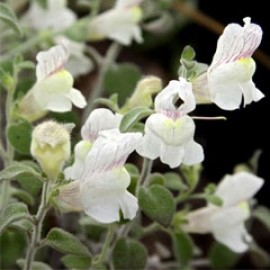
Antirrhinum Molle

Antirrhinum Molle

code: 887 It seeds itself freely but is very liable to hybridize with A Family: Plantaginaceae Common name: Dwarf Snapdragon, Soft snapdragon Plant Classification: Hardy perennial Minimum Height: 20 cm Maximum Height: 30 cm Packet Content(approx.): 20 This classy snapdragon is actually a small shrub, with grey, softly hairy leaves and quite large flowers, either

Antirrhinum Molle Read More »

Chiastophyllum Oppositifolium

Chiastophyllum Oppositifolium

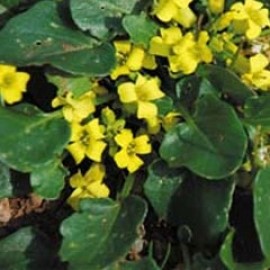
code: 886 Arching stems carrying sprays of yellow ‘lambs tail’ flowers Family: Crassulaceae Plant Classification: Hardy perennial Maximum Height: 15 cm A superb rockery or wall plant. Arching stems carrying sprays of yellow ‘lambs tail’ flowers, sprouting from hardy evergreen succulent rosettes. A very long lived, high value plant. Sowing advice: Seeds can be sown

Chiastophyllum Oppositifolium Read More »

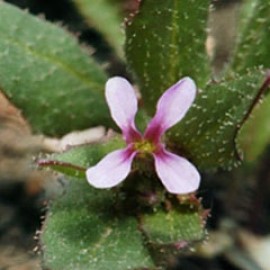
Chorispora Sabulosa

Chorispora Sabulosa

code: 884 A perfect alpine house or show-winning plant Family: Brassicaceae or Cruciferae Common name: CHORISPORA ELEGANS Plant Classification: Hardy perennial Minimum Height: 6 cm Maximum Height: 10 cm Packet Content(approx.): 6 Relatively large, almost stemless, purple-mauve flowers open above prostrate rosettes of attractive, deeply-incised, frilly-edged leaves. A perfect alpine house or show-winning plant, it

Chorispora Sabulosa Read More »

Cistus Populifolis

Cistus Populifolis

code: 882 chalk-white flowers Family: Cistaceae Common name: Poplar Leafed Cistus Plant Classification: Hardy shrub Minimum Height: 1.2 meters Maximum Height: 1.5 meters Packet Content(approx.): 12 In spring, handsome clusters of large round buds enclosed in red sepals open into golden-eyed, chalk-white flowers, over a dense bush of very attractive, pointed, fresh-green aromatic leaves which

Cistus Populifolis Read More »

Clematis ALpina 'Frances Rivis'

Clematis ALpina ‘Frances Rivis’

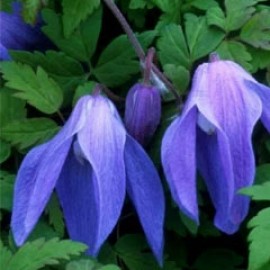
code: 880 It was Awarded The ‘Award of Garden Merit’ by the RHS Family: Ranunculaceae Common name: Virgin’s Bower Plant Classification: Hardy climber Minimum Height: 1.8 meters Maximum Height: 3.0 meters Packet Content(approx.): 8 This superlative, vigorous, free-flowering variety, has larger flowers than the species, with pale blue nodding flowers bearing beautiful blue petals and

Clematis ALpina ‘Frances Rivis’ Read More »

Clematis 'Blue Eclipse'

Clematis ‘Blue Eclipse’

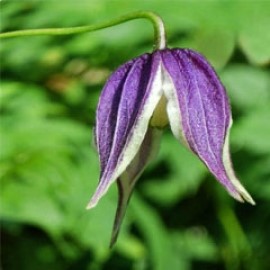
code: 879 A truly stunning cultivar that deserves to be in every garden Family: Ranunculaceae Common name: Clematis koreana ‘Blue Eclipse’ Plant Classification: Hardy climber Minimum Height: 1.8 meters Maximum Height: 2.4 meters Packet Content(approx.): 10+ This early-flowering deciduous variant of Clematis koreana has single, nodding, bell-shaped flowers, the outside of the sepal being deep-purple,

Clematis ‘Blue Eclipse’ Read More »

Draba Ventosa

Draba Ventosa

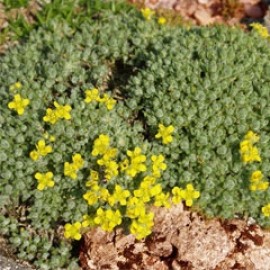
code: 877 One of the most lovely alpines Family: Cruciferae Common name: Wind River Draba Plant Classification: Hardy perennial Minimum Height: 2 cm Maximum Height: 4 cm Packet Content(approx.): 12 Sheets of stemless golden flowers open on a moss-like cushion on this potential show-winner that resembles some of the cushion androsaces. One of the most

Draba Ventosa Read More »

Geranium Bohemicum

Geranium Bohemicum

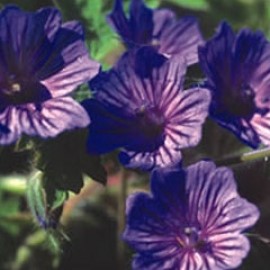
code: 875 This new-on-the-scene plant Family: Geraniaceae Plant Classification: Hardy perennial Minimum Height: 30 cm Maximum Height: 45 cm Packet Content(approx.): 10+ (Syn. Geranium ‘Orchid-Blue’). This new-on-the-scene plant, often confused with the very similar Geranium lanuginosum, produces flowers of a rarely seen shade of pure campanula blue, on low brittle hairy stems. Wonderful in rich

Geranium Bohemicum Read More »

Geranium Ocellatum

Geranium Ocellatum

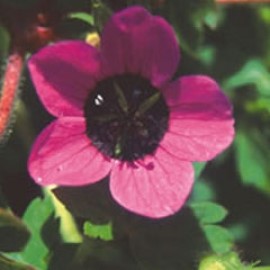
code: 874 Internally pollinated seeds are also sometimes produced later Family: Geraniaceae Plant Classification: Hardy biennial Hardy annual Minimum Height: 15 cm Maximum Height: 30 cm Packet Content(approx.): 10 This curious and most unusual little gem from the Himalayas grows a spreading cushion upon which appear a succession of black-eyed deep pink flowers in spring

Geranium Ocellatum Read More »

Geranium Pyrenaicum 'Bill Wallis'

Geranium Pyrenaicum ‘Bill Wallis’

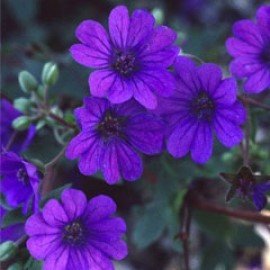
code: 873 This cultivar is often wrongly spelled ‘Bill Wallace’ Family: Geraniaceae Plant Classification: Hardy perennial Minimum Height: 30 cm Maximum Height: 38 cm Packet Content(approx.): 10+ This is the best cultivar (coming true) of the type, with especially desirable, very deep violet-purple flowers, which are at their impressive best in the late evening. This

Geranium Pyrenaicum ‘Bill Wallis’ Read More »