
code: 905
It is claimed that they have ‘more omega-3
Family: Lamiaceae
Plant Classification: Half hardy perennial
Minimum Height: 50 cm
Maximum Height: 70 cm
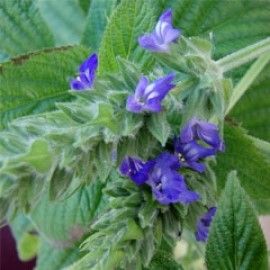
One of the new ‘superfoods’ to arrive, Chia seeds are antioxidant rich, rather like Goji Berries. It is claimed that they have ‘more omega-3 and dietary fibre than any other food from nature’. Remarkably, when liquidised and mixed with water, they swell to a thick gel, somewhere between caviar and tapioca in texture. In America, chia health drinks are sold, seeds suspended rather like raspberry jam. One of the main attractions of chia is that like flax, it is a plant source of omega-3, the essential fatty acid, that has been shown to have an array of health benefits, such as protecting against heart disease. And even if you only need stronger nails, or more endurance for your workouts, eat chia!
Sowing advice:
For best results, seeds are best sown directly into the ground where required in the spring. Alternatively, sow in late winter/early spring in gentle warmth, 15-20 degrees C. Prick out into small 7cm/3″ pots and plant in final position, about 60cm apart, preferably in a good, warm or hot spot, when the plants are established. Collect masses of ripe seeds when the seed heads are completely ripe.
Origin:
Chia seeds come from the plant Salvia hispanica L., and were at one time a major food crop in Mexico and Guatemala. Cultivated as a food source as early as 3500 BC, it was offered to Aztec gods in religious ceremonies. According to industry reports, the chia seed market is projected to reach more than 2 billion USD in sales by 2022.
Chemistry:
Two tablespoons of chia seeds (1 ounce or 28 grams) contain about 140 calories, 4 grams of protein, 11 grams of fiber, 7 grams of unsaturated fat, 18% RDA for calcium, and trace minerals including zinc and copper. They are the richest plant source of omega-3 fatty acids. Chia seeds are a complete protein, containing all nine essential amino acids that cannot be made by the body.
Diet:
Chia seeds contain several components that, when eaten as part of a balanced plant-rich diet, may prevent the development of various chronic diseases. Of particular interest by researchers is chia seeds high content of linoleic and alpha-linolenic (ALA) fatty acids. Sixty percent of the oil in chia seeds is from these omega-3 fatty acids. [2] However, available research has been more favorable towards a diet containing omega-3-rich foods rather than on chia seeds alone.
Risks:
A large Chinese cohort of more than 63,000 individuals found that those with the highest intakes of omega-3 fatty acids from seafood and plant sources had a 17% reduced risk of cardiovascular mortality compared with those who had the lowest intakes. [3] Few cohort studies include ALA plant sources of omega-3, but these oils are fairly common in the Asian diet. The Nurses Health Study found a 40% reduced risk of sudden cardiac death in women who ate the highest amounts of ALA.
Benefits:
Animal studies have shown that chia seeds can beneficially affect cholesterol levels, weight loss, and increased satiety. [6] However, literature reviews and controlled trials in humans have not shown a specific benefit of chia seeds on cardiovascular risk factors including body weight, blood pressure, lipid levels, blood sugar, and inflammation.
Uses:
Chia seeds are a highly versatile ingredient. They have little if any distinctive flavor, so they dont compete with other flavors in a dish. They also soften in the presence of liquid and become a less detectable texture. Commercially, they are added to cereals, crackers, beverages, breads, and other baked goods to boost their nutritional value. Basically, chia seeds can be added as long as there is moisture to hold the seed in place.