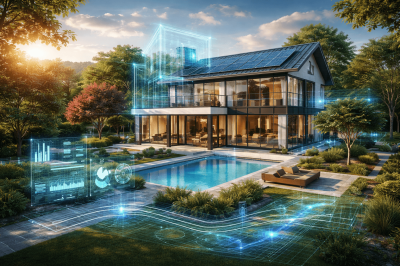
Introduction: Why Digital Twin Technology Is Transforming Modern Homes
The way we design and manage homes is changing faster than ever before. Today, homeowners, developers, and sustainability experts are looking for smarter, more efficient ways to build and maintain properties. One of the most important innovations driving this transformation is Digital Twin technology for homes and landscapes.
Digital Twins allow property owners to create a living digital model of their home and outdoor environment. Instead of guessing how a design will perform, homeowners can now predict energy use, water consumption, shade patterns, and heat performance before construction even begins.
As smart homes continue to evolve, Digital Twin technology is becoming a key tool in creating fully intelligent properties that combine smart home automation, smart landscaping technology, and environmental performance optimization.
What Is Digital Twin Technology for Homes?
Digital Twin technology is a virtual replica of a physical property that updates using real-world data, simulations, and predictive analytics. Unlike traditional 3D models, Digital Twins are dynamic and continuously evolving.
A residential Digital Twin can include:
3D property and landscape models
Building materials and structure data
Soil and drainage information
Weather and climate patterns
Energy usage data
Water consumption modeling
Smart sensor and IoT data
This technology allows homeowners and designers to simulate real-life performance instead of relying on estimates.
How Digital Twin Technology Is Changing Smart Landscaping
Smart landscaping technology is becoming a major part of sustainable home design. Traditional landscaping focuses mostly on aesthetics. Digital Twin landscaping focuses on performance, efficiency, and long-term sustainability.
Using Digital Twin property modeling, landscape designers can now predict:
Irrigation needs before planting
Long-term tree growth and shade coverage
Outdoor heat accumulation
Flood and drainage risks
Seasonal landscape performance
This approach reduces maintenance costs and improves environmental performance over time.
3D Property Models: The Foundation of Digital Twin Technology
High-quality 3D property models are the foundation of Digital Twin systems. These models are created using advanced technologies such as:
LiDAR scanning
Drone mapping
GIS property data
Satellite imagery
Architectural building models
These tools create a highly accurate digital representation of the entire property — including terrain, structures, and vegetation.
Benefits of 3D Property Modeling
Better design visualization
Early problem detection
Improved construction planning
More accurate cost prediction
Better sustainability planning
For homeowners, this means fewer surprises and more confidence in design decisions.
Predicting Energy Use Using Digital Twin Technology
One of the biggest advantages of Digital Twin technology in real estate is the ability to predict energy performance.
Outdoor design has a major impact on indoor energy efficiency. Digital Twins can simulate:
Solar Exposure and Heat Gain
Digital models can predict how sunlight affects walls, roofs, and outdoor surfaces throughout the year.
Tree Placement and Cooling Effects
Strategically placed trees can reduce cooling costs. Digital Twin simulations show exactly where trees should be planted.
Hardscape Material Heat Performance
Some materials absorb more heat than others. Digital Twins help compare materials before installation.
This allows homeowners to design landscapes that actively reduce energy bills.
Predicting Outdoor Water Use and Smart Irrigation Planning
Water efficiency is becoming one of the most important parts of modern landscaping. Digital Twin technology allows homeowners to predict irrigation needs using real environmental data.
Smart Irrigation Simulation
Digital Twins can model:
Soil type water retention
Plant water demand
Local rainfall patterns
Seasonal climate changes
Stormwater and Drainage Modeling
Digital Twin simulation helps predict:
Flood risk zones
Drainage flow patterns
Soil saturation during storms
Erosion risk areas
This helps prevent costly water damage and reduces water waste.
Shade Simulation: Designing Outdoor Comfort and Energy Efficiency
Shade modeling is one of the most powerful features of Digital Twin landscape design.
Digital Twins can simulate:
Sun position during different seasons
Tree growth over 10–20 years
Outdoor living comfort zones
Window shading performance
This ensures that landscaping decisions improve both outdoor comfort and indoor energy efficiency.
Heat Simulation and Urban Heat Island Reduction
Many properties experience excessive heat buildup from hard surfaces. Digital Twin heat simulation helps solve this problem.
Heat Modeling Can Help With:
Surface temperature prediction
Outdoor comfort design
Cooling energy reduction
Heat island mitigation strategies
This is especially important in urban and suburban environments where heat retention can increase cooling costs.
Why Digital Twin Technology Is Critical for Sustainable Homes
Sustainability is no longer optional. Digital Twin technology makes sustainability measurable and practical.
Environmental Benefits
✔ Reduced water consumption
✔ Lower energy use
✔ Better climate resilience
✔ Lower carbon footprint
✔ Improved long-term property durability
Digital Twins allow sustainability decisions to be based on real data instead of assumptions.
Digital Twin Technology and Smart Home Integration
The future of smart homes includes outdoor intelligence. Digital Twins connect with smart home systems through sensors and automation.
These systems can include:
Soil moisture sensors
Weather monitoring stations
Smart irrigation controllers
Outdoor temperature sensors
Energy monitoring systems
This creates a fully connected smart property ecosystem.
The Future of Digital Twin Technology in Real Estate
Digital Twin technology will continue expanding across residential and commercial real estate.
Future capabilities may include:
AI-driven landscape optimization
Automatic irrigation adjustment based on weather forecasts
Long-term climate risk prediction
Predictive property maintenance
Community-wide environmental monitoring
Digital Twins will become a standard feature of high-performance homes.
Why Homeowners and Developers Are Investing in Digital Twin Technology
Early adopters gain significant advantages:
Financial Benefits
Lower operating costs
Higher property value
Reduced maintenance expenses
Environmental Benefits
Lower water usage
Better energy efficiency
Climate-resilient design
Lifestyle Benefits
Better outdoor comfort
Smarter automation
Higher long-term property reliability
Final Thoughts: The Shift Toward Intelligent Properties
Digital Twin technology represents the next major evolution in smart homes and smart landscaping technology.
Instead of designing properties based on estimates, homeowners can now design based on measurable future performance.
The future of property design will focus on:
Data-driven sustainability
Predictive energy and water modeling
Integrated smart home and landscape technology
Climate-resilient property design
Digital Twin technology is not just a trend — it is becoming the foundation of next-generation residential design.