
code: 930
It has a cosmopolitan distribution in tropical
Family: Sapindaceae
Common name: Hopbush, Candlewood, Switchsorrel, Wedge Leaf Hopbush, Hopwood, Hopshrub, Dodonaea cuneata
Plant Classification: Half hardy tree Hardy tree
Minimum Height: 2.0 meters
Maximum Height: 9.0 meters
Packet Content(approx.): 20
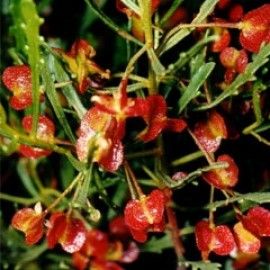
The relatively insignificant flowers of this tree mature into attractive winged fruits which can become red or purple as they mature, making it a popular garden plant in the tropics and subtropics, whilst one cultivated variety develops purple, shiny leaves when grown in direct light. It has a cosmopolitan distribution in tropical, subtropical and warm temperate regions of Africa, the Americas, southern Asia and Australasia. The wood is unusually tough and durable and the Maori of New Zealand have used it to fashion clubs and other weapons, the Maori name for the shrub, akeake, meaning “forever and ever”
Sowing advice:
These seeds have already been thoroughly cleaned and cold-stored for several months. They should be sown into a well-drained, sandy compost at any time of the year, and covered thinly with sand or grit and kept moist. Keep at between 15 and 20 degrees C. Germination usually occurs within 4 to 6 weeks although some seeds may take much longer.
Uses
The wood is extremely tough and durable. In New Zealand, where it is the heaviest of any native wood, the Māori have traditionally used it for making weapons, carved walking staves, axe-handles, and weights on drill shafts.[9] D. viscosa (also known as “hopbush”) is used by the people from the western
part of the island of New Guinea, Southeast Asia, West Africa and Brazil for house building and as firewood. Its leaves may also be used as plasters for wounds.[10]
Native Hawaiians made pou (house posts), laʻau melomelo (fishing lures), and ʻōʻō (digging sticks) from ʻaʻaliʻi wood and a red dye from the fruit.[11]
The cultivar ‘Purpurea’, with purple foliage, is widely grown as a garden shrub. Dodonaea viscosa easily occupies open areas and secondary forest, and is resistant to salinity, drought and pollution.[10] It can be used for dune stabilization, remediation of polluted lands and for reforestation. The plant is tolerant to strong winds, and therefore is commonly used as hedge, windbreak, and decorative shrub.
The Seri use the plant medicinally.[8] It was also used to stimulate lactation in mothers, as a dysentery treatment, to cure digestive system disorders, skin problems and rheumatism in Africa and Asia. In New Guinea, people use it as incense for funerals. In the past D. viscosa was used instead of hops for beer brewing by Australians (as reflected in the name “hopbush”).