code: 1022
Description:
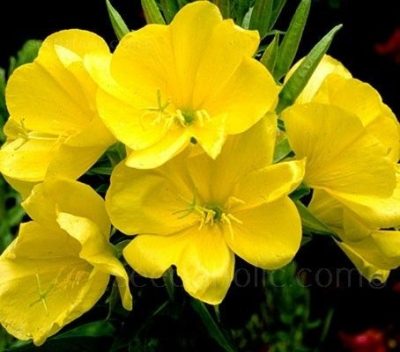
Oenothera biennis, commonly known as Evening Primrose, brings a vibrant splash of summer colour to your garden. Blooming begins in June and continues through the season, offering a consistent display of bright yellow flowers until approximately September.
Known for its fragrant blossoms opening in the evening, this plant has a unique appeal: the sweet scent and glowing petals (often faintly phosphorescent) emerge at dusk, making it especially attractive in twilight garden settings.
A hardy, naturalised wildflower originally native to North America, it has become widely used in garden landscapes for its ornamental, ecological, and low-maintenance attributes. It makes an excellent addition to pollinator-friendly gardens, meadow plantings, and herbaceous borders.
Updated Research & Insights (2024-25)
- A 2024 study found that Evening Primrose Oil (EPO) from Oenothera biennis significantly reduced inflammation and fibrosis in uterine tissue in a rat model, suggesting promising medicinal benefits beyond traditional uses.
Nature - In 2025, phytochemical analyses revealed new bioactive compounds in Oenothera biennis, notably triterpenoids and flavonoids, which may contribute to its medicinal and nutraceutical potential.
ScienceDirect - Agronomic research in 2025 showed that foliar application of synthetic cytokinins (CPPU, TDZ) enhanced growth, flowering, seed yield and oil composition in Evening Primrose grown for ornamental or medicinal harvest.
EKB Journals
These findings strengthen its value not only for landscaping aesthetics and biodiversity, but also for “functional garden” use (where plants offer ecological, wildlife- and human-health benefits).
Botanical & Garden Landscape Details
- Scientific Name: Oenothera biennis
- Common Name: Evening Primrose
- Family: Onagraceae
- Plant Type: Usually biennial (sometimes treated as perennial/annual in gardens)
- Height: Typically 30-100 cm (12-40 in) when flowering
- Flower Colour: Bright yellow (sometimes with orange or reddish tinges)
- Bloom Period: June to September
- Sun Exposure: Full sun preferred; partial shade tolerated
- Soil Conditions: Prefers well-drained, sandy or gravelly soils; tolerates poor soils; dislikes heavy, water-logged soils
- Landscape Use: Wildflower meadows, pollinator gardens, naturalised borders, low-maintenance slopes
Sowing & Growing Instructions
When to Sow:
Spring (after last frost) for summer blooms
Autumn (August-September) for early-season blooms the following year
How to Sow:
- Prepare a sunny bed with well-drained soil; lightly rake and level the surface.
- Scatter seeds thinly and evenly (mixing with fine sand helps distribution). Do not cover deeply—seeds require light to germinate.
- Keep soil moist until germination (typically 15–30 days at ~18-21 °C / 65-70 °F).
- When seedlings have 2–3 true leaves, thin to approx. 45 cm (18 in) spacing.
- Water well after transplanting; once established, the plant is highly drought-tolerant.
Cultivation & Maintenance:
- Prefers full sun; avoid heavy shade.
- Very tolerant of poor, sandy soils; avoid water-logging.
- Once established, requires minimal care; self-seeds readily in undisturbed areas.
- At end of flowering season, plants can be cut back. If you desire reseeding, leave seed-heads and avoid disturbing rosettes.
- In lawn or mown areas, ensure mower height is high enough not to damage low rosette stage.
Ecological & Landscape Benefits
- Pollinator-friendly: The evening-opening flowers attract moths, evening-active insects, bees and butterflies.
- Wildlife Value: Seeds are eaten by birds; the plant supports biodiversity on slopes or wild patches.
- Low-maintenance landscaping: Ideal for naturalised or meadow zones where minimal gardening is desired.
- Visual impact: Bright yellow blooms mix beautifully with grasses and companion plants in informal or cottage-style borders.
- Functional & edible: Historically, the leaves, roots and seeds were used for food; the oil extracted from seeds is used for dietary and medicinal purposes.
Culinary & Medicinal Uses
- Culinary: Younger leaves may be used as cooked greens; roots (in first year) can be boiled like potatoes or parsnips; flowers make an attractive garnish.
- Medicinal: Seed oil (Evening Primrose Oil, EPO) contains gamma-linolenic acid (GLA) and linoleic acid (LA), both known for anti-inflammatory properties. Recent studies show EPO’s effect on inflammation, fibrosis and reproductive tissue health.
- Note: Always use with caution and under professional guidance; traditional herbal uses do not replace medical advice.
Historical & Cultural Significance
- Native to eastern and central North America; introduced to Europe around 1614 and widely naturalised.
- Known historically as “King’s cure-all” due to its wide application in folk medicine.
- The botanical name: Oenothera derives from Greek ‘oinos’ (wine) + ‘thera’ (hunt) referencing ancient use of the root to scent wine; biennis indicates its usual two-year life cycle.
- Also called “Fever plant” or “Four-o’clock” for the timing of its blooms.
Garden Design & Landscaping Compatibility
- Use in wildflower meadows or naturalised beds, especially on slopes or in poor soils where other plants struggle.
- Ideal for pollinator gardens due to evening bloom and scent which attract nocturnal pollinators.
- Suitable for low-maintenance landscapes: minimal input once established, self–seeding, drought-tolerant.
- Looks attractive when paired with tall grasses, late-season perennials (like Rudbeckia, Echinacea), or silver-foliaged plants.
- Useful for edible/functional gardens: seed oil production, edible roots/leaves, ecological benefits.