Code: 1011
Lathyrus vernus ‘Spring Vetchling’ seeds offer a rare and elegant form of the classic spring vetchling. Unlike the typical simple leaflets, this selection has finely divided, fern-like foliage with wavy tendrils, creating a delicate, almost ethereal texture. The plant resembles a miniature bushy sweet pea, ideal for woodland gardens, shady borders, and naturalistic plantings.
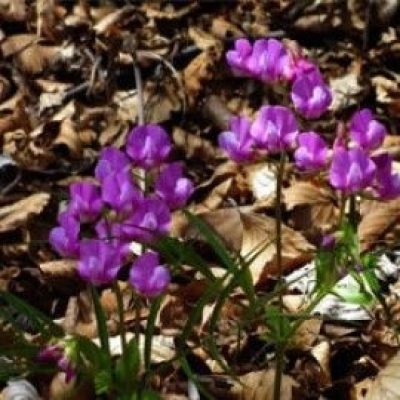
From March to May, it produces sprays of pea-like flowers with violet standards and deep blue keels, which stand out beautifully against the soft green foliage. This compact, low-growing perennial is perfect for gardeners looking for spring colour in shade without the need for climbing supports.
Each packet contains approximately 5 seeds, making it a special opportunity to grow this rare, distinctive perennial.
Key Features
Family: Fabaceae
Common Name: Spring Vetchling
Botanical Name: Lathyrus vernus (unusual foliage form)
Plant Type: Hardy herbaceous perennial
Height: 25–35 cm (10–14 in)
Spread: 25–35 cm (compact clump)
Habit: Multi-stemmed, clump-forming, non-climbing sweet pea
Foliage: Deciduous, finely divided leaflets with wavy tendrils (fern-like texture)
Flowers: Blue-violet pea-flowers with dark blue keels, 5–8 flowers per raceme
Bloom Period: March to May (peak in April)
Sun Exposure: Part shade to full shade
Soil: Well-drained, medium fertility; moist in spring but not waterlogged
Maintenance: Low once established
Packet Content: ~5 seeds
Ideal for shady borders, woodland gardens, cottage gardens, and naturalised plantings, adding texture and early spring colour.
Plant Description
Lathyrus vernus is a non-climbing spring perennial sweet pea. Its unusual foliage and compact habit make it highly desirable:
Bushy clumps arise from multiple stems, 25–35 cm high
Finely divided leaflets create a delicate, fern-like effect
Axillary racemes carry 5–8 pea-like flowers in early spring
Flowers open reddish-purple to blue-violet, maturing to violet-blue
Foliage remains attractive for some time after flowering before fading
Because it is slow-spreading and clump-forming, it works perfectly in small gardens or shady corners where a gentle splash of spring colour is needed.
Sowing Advice
For best results, use fresh seeds and allow patience, as germination can be slow and irregular.
When to Sow
Spring: Late winter to spring sowing provides a full season of growth
Autumn/Winter: Sow in a cold frame or unheated greenhouse for natural chilling and spring germination
How to Sow
Use a soil-based seed compost in pots or trays
Sow seeds on the surface and cover lightly with fine grit or compost (approx. seed depth)
Water gently to avoid disturbing seeds
Maintain temperature around 15–20°C (59–68°F) for faster germination, or use an unheated greenhouse for natural fluctuations
Many seeds have built-in dormancy; seedlings may appear after several weeks or months
After Germination:
Prick out seedlings into individual pots with free-draining compost
Grow in part shade, keeping compost moist but not waterlogged
Avoid disturbing roots; plant in garden spring or early autumn, spacing 25–30 cm apart
Note: Slow to establish, but offers many years of reliable spring flowering
Growing Conditions & Care
Light: Part shade to full shade; avoid full sun in hot, dry areas
Soil: Well-drained, medium fertility; appreciates spring moisture
Watering: Regularly during establishment and dry springs; low maintenance once established
Maintenance: Foliage may die down post-flowering; mark the clump for visibility
Top-dress: Leaf mould or garden compost in autumn mimics woodland conditions
Root Disturbance: Avoid frequent lifting or dividing
Pests/Diseases: Minimal issues; generally reliable and low-maintenance
Noteworthy Characteristics
Non-climbing sweet pea (contrast to annual Lathyrus varieties)
Compact, clump-forming habit for front of shady borders
Showy blue-violet flowers when spring colour is scarce
Fern-like, finely divided foliage, perfect for layered shade plantings in 2025 garden trends
The genus Lathyrus comes from Greek lathyros (pea/pulse), and the epithet vernus means “of spring,” reflecting its early flowering season.
Garden Uses & Companions
Ideal for:
Shady borders (front or middle of border)
Woodland gardens under deciduous trees and shrubs
Cottage and wild gardens
Naturalised plantings with bulbs, ferns, and shade-loving perennials
Companion plants:
Spring bulbs: Narcissus, Scilla, Chionodoxa
Shade perennials: Hellebores, Pulmonaria, Epimedium
Woodland grasses and ferns for layered texture
The combination of fern-like foliage and blue-violet flowers from March to May makes Lathyrus vernus a subtle but captivating highlight in any shade or woodland garden.