code: 1026
Description:
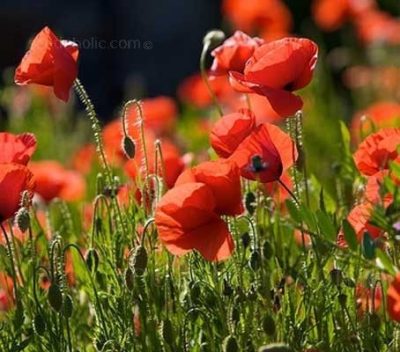
Papaver rhoeas, commonly known as the Flanders Poppy, Corn Poppy, or Field Poppy, is a striking wildflower celebrated for its vivid scarlet-red petals and black centers. Native to Eurasia and North Africa, this hardy annual thrives in full sun and well-drained soils. It blooms profusely from June to September, attracting a variety of pollinators such as bees, butterflies, and hummingbirds.
Key Features
- Brilliant Scarlet Blooms: Iconic cup-shaped red flowers with black markings.
Pollinator Magnet: Attracts bees, butterflies, and other beneficial insects.
Easy to Grow: Hardy annual ideal for wildflower meadows, verges, and naturalized plantings.
Self-Seeding: Returns each year with minimal care.
Symbol of Remembrance: Honours the soldiers of World War I and continues to symbolize peace and remembrance today.
Certified Organic Seed: Grown without chemicals or synthetic treatments.
Growing Information
When to Sow
- Spring (March–May) for early summer blooms.
- Autumn (August–September) for late spring to early summer flowering.
How to Sow
- Choose a sunny location with well-drained soil.
- Lightly rake and level the ground, removing weeds.
- Scatter seeds thinly and evenly — mixing them with fine sand helps even distribution.
- Cover lightly with soil or sand (just a few millimeters).
- Keep moist until germination, which occurs within 4–25 days.
- Thin seedlings to about 15 cm (6 in) apart once they reach 10–12 cm tall.
- Water gently — poppy roots are delicate. Avoid overwatering.
Cultivation & Care
- Feeding: Not usually required. Use mild liquid fertilizer if growth is weak.
- Watering: Moderate; drought-tolerant once established.
- Deadheading: Remove faded flowers to encourage extended blooming.
- Self-Seeding: Allow some seed pods to mature and scatter naturally for next year’s blooms.
- Winter Care: Seeds can remain viable for many years; soil disturbance in autumn encourages germination.
For Cut Flowers:
- Harvest poppies when buds are just starting to open.
- To extend vase life, seal stem ends by briefly dipping them in boiling water or a flame.
- They will last several days as striking cut flowers indoors.
Plant Uses:
✔️ Wildflower Meadows
✔️ Cottage & Informal Gardens
✔️ Butterfly & Bee Gardens
✔️ Memorial or Remembrance Gardens
✔️ Cut Flower Arrangements
Origin & Habitat:
Papaver rhoeas is native to Eurasia and North Africa, thriving in light, well-drained, calcareous soils. It likely spread alongside early agricultural crops thousands of years ago and has since naturalized throughout Europe, North America, and beyond.
Historical & Cultural Significance:
The Flanders Poppy – A Global Symbol of Remembrance
The Flanders Poppy became a symbol of remembrance after World War I, where it bloomed across the battlefields of Flanders. Immortalized in John McCrae’s poem “In Flanders Fields” (1915), it came to represent sacrifice, resilience, and hope.
Laurence Binyon’s famous poem “For the Fallen” (1914), often recited at memorials, further cemented the poppy as a lasting tribute:
“They shall grow not old, as we that are left grow old…”
Organic Certification:
Our Papaver rhoeas seeds are 100% certified organic, grown under strict ecological standards without chemical fertilizers or pesticides. They are untreated, non-GMO, and supplied in their natural form — labeled with the official organic certification symbol.
Botanical Details:
- Scientific Name: Papaver rhoeas
- Common Names: Common Poppy, Corn Poppy, Flanders Poppy, Field Poppy, Corn Rose
- Family: Papaveraceae
- Plant Type: Hardy Annual
- Height: 30–60 cm (12–24 in)
- Bloom Period: June–September
- Sun Exposure: Full Sun
- Soil Type: Well-drained, light, calcareous
- Pollinators: Bees, butterflies, and other insects
Laurence Binyon
Laurence Binyon (1869-1943), the poet and art critic was a brilliant man. he was born in Lancaster and worked at the British Museum as Keeper of Prints and Drawings. He was a scholar of William Blake and of Oriental Art before he going to war. He was a Red Cross volunteer at the Western Front.
He is best known for his poem For The Fallen (1914), which contains seven stanzas (verse). It is perhaps the most widely known and widely quoted poem of the Great War. The fourth stanza is now used all over the world during services of remembrance and is inscribed on countless war memorials.
They shall grow not old, as we that are left grow old,
Age shall not weary them, nor the years condemn.
At the going down of the sun and in the morning
We will remember them.