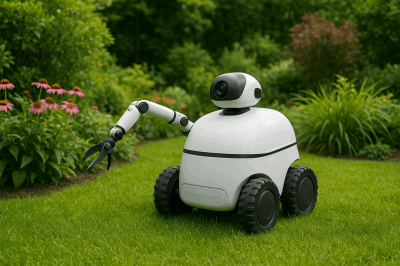
As landscaping and gardening move into the age of automation, robotic garden maintenance has become one of the most revolutionary trends shaping the future of outdoor care. In 2025 and beyond, homeowners increasingly rely on AI-powered garden robots to perform labor-intensive tasks such as mowing, weeding, pruning, cleaning, and monitoring plant health. These advancements dramatically reduce physical effort, improve garden efficiency, and help homeowners create beautifully maintained landscapes with minimal time investment.
By integrating robotics, artificial intelligence, advanced sensors, and automation systems, modern gardens are becoming smart, self-sustaining ecosystems. Below is an in-depth exploration of how robotic garden maintenance works, which technologies are dominating the industry, and why this trend is transforming landscaping forever.
1. The Rise of Garden Robotics: Why Homeowners Are Adopting Automation
Robotic garden systems are gaining massive popularity for several reasons:
✔️ Lack of time
Modern homeowners want beautiful outdoor spaces but often lack the hours needed for mowing, trimming, weeding, and cleaning.
✔️ Physical limitations
Many people face back pain, arthritis, or mobility challenges. Robotic systems eliminate physical strain.
✔️ Desire for low-maintenance landscapes
As low-water and sustainable gardens rise, automation helps maintain them efficiently.
✔️ Precision & consistency
Unlike humans, robots work with predictable accuracy, ensuring consistent lawn height, clean edging, and optimal soil moisture levels.
2. Types of Robotic Garden Tools Transforming Modern Landscapes
The robotics industry is expanding rapidly. Today’s top-performing garden robots include:
2.1. Robotic Lawn Mowers
Robotic lawn mowers are the most widespread and advanced garden robots in 2025.
How They Work
They use:
GPS navigation
LiDAR (laser mapping)
Ultrasonic sensors
Boundary wires or wireless mapping
AI path optimization
These features allow them to:
Mow lawns automatically
Avoid obstacles
Return to charging docks
Adjust mowing height
Detect rain and pause operation
Popular Models
Husqvarna Automower
Gardena Smart Sileno
Worx Landroid
Stihl iMow
Ecovacs Goat
Why They’re Game-Changers
Extremely quiet
Zero emissions (electric)
Healthier lawns (mulching system)
Reliable for large properties
SEO Keywords: robotic lawn mower, AI lawn care, automatic mower, smart landscaping tools
2.2. Robotic Weed Control Systems
Weeding is one of the most tedious garden tasks—and robots now do it effortlessly.
How They Work
Robotic weeders use:
Computer vision
Machine learning for plant recognition
Infrared weed detection
Micro-blade cutting or micro-targeted heating
Popular Devices
Tertill Garden Robot
FarmBot (small-scale gardens)
Naio Oz Weeder
Advantages
Removes weeds without chemicals
Gently tills topsoil
Prevents soil compaction
Great for vegetable gardens and raised beds
SEO Keywords: weeding robot, garden automation, chemical-free weed control
2.3. Leaf Collection & Cleanup Robots
Autumn cleanup is physically demanding, but robotic leaf collectors make it effortless.
Features:
High-powered suction
Self-navigation
Mulching function
Auto-dumping bins
These robots greatly support homeowners in fall landscape maintenance.
SEO Keywords: robotic leaf collector, autonomous garden cleaning, fall garden maintenance
2.4. Robotic Hedge Trimmers & Pruners (Emerging Tech)
Although still developing, early prototypes can:
Trim hedges
Shape bushes
Prune small branches
Detect plant edges using AI
Companies in Japan, Germany, and Canada are currently leading development.
SEO Keywords: robotic hedge trimmer, AI pruning system, automated gardening innovations
2.5. Smart Irrigation & Watering Robots
Smart watering robots combine:
Soil moisture sensors
Weather-based AI forecasts
Drip irrigation automation
Mobile app control
Some newer models autonomously navigate to plants using wheels and sensors.
SEO Keywords: smart irrigation robot, AI watering system
3. How Robotics Improves Garden Quality & Sustainability
Robotic garden maintenance isn’t just about convenience—it contributes significantly to sustainability and plant health.
3.1. Consistent Lawn Health
Robotic mowers trim small bits of grass daily, promoting:
denser lawns
fewer weeds
healthier roots
Mulched clippings naturally fertilize the soil.
3.2. Water Conservation
Smart irrigation robots:
reduce overwatering
detect soil drought zones
adjust watering volume based on plant needs
This supports water-wise landscaping.
3.3. Pest & Disease Prevention
Some robots include AI plant health scanning, which detects:
fungal infections
discoloration
leaf curl
unusual wilting
These notifications allow early treatment and prevent plant loss.
3.4. Reduced Use of Chemicals
Robotic weeding systems allow gardens to be fully organic, eliminating the need for:
herbicides
weed-kill sprays
synthetic treatments
This enhances soil biodiversity and protects pollinators.
4. Integration With AI: Building the Fully Smart Garden
Robotic garden tools become exponentially more powerful when integrated with AI systems.
4.1. AI Scheduling & Automation
AI determines:
ideal mowing times
irrigation cycles
weeding frequency
leaf collection paths
It optimizes every task for weather conditions and seasonality.
4.2. Smart Garden Ecosystem Platforms
Some systems integrate all robots, sensors, and irrigation into one app, such as:
Gardena Smart System
Husqvarna Smart Garden Hub
GreenIQ AI Controller
This creates a fully connected smart landscape.
4.3. Data-Driven Garden Insights
Robots collect valuable data:
soil moisture
lawn health trends
plant growth patterns
microclimate conditions
AI analyzes this to recommend pruning, fertilizing, planting, or pest control actions.
5. The Future of Robotic Garden Maintenance (2025–2030 Trends)
The next wave of innovation will include:
✔️ Fully autonomous multi-task robots
One robot performing mowing + weeding + pruning.
✔️ Flying drone gardeners
Drones will scan large properties and spray organic treatments.
✔️ AI-powered edible garden robots
Automating vegetable garden care.
✔️ Solar-powered self-charging robots
Zero electricity consumption.
✔️ Robots that map and diagnose garden ecosystems
Using deep plant biology analysis.
✔️ Emotion-AI garden assistants
Provide personalized suggestions for improving garden beauty and mental well-being.
SEO Keywords: future of landscaping, AI garden robots, robotic outdoor care
6. Why Robotic Landscaping Is Becoming a Global Standard
By 2030, experts predict that 40–60% of modern homes in developed countries will use at least one garden robot.
Reasons include:
aging population → automation support
work-life imbalance → homeowners lack time
heatwaves & drought → need for smart irrigation
eco-friendly trend → chemical-free weeding
AI boom → smarter, cheaper robots
rising value of outdoor living spaces
Robotic maintenance is transforming landscaping into a high-tech, low-effort lifestyle.