code: 1031
Description
Sanguisorba officinalis, commonly known as Greater Burnet, is a native European perennial herb that is enjoying renewed popularity thanks to the resurgence of interest in perennial and naturalistic garden plantings. These vigorous plants add contrast and structure to softer, less defined garden forms.
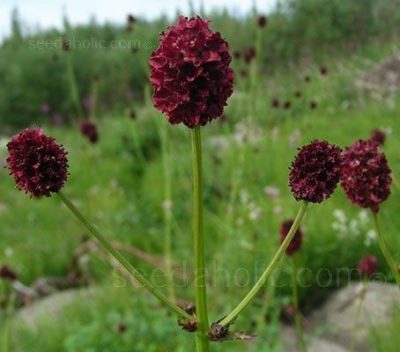
With its long flowering period, upright habit, and branched stems, Sanguisorba brings a relaxed, natural feel to the garden. In spring, deciduous feathery green foliage emerges, forming attractive ground cover. By summer, slender stems topped with red, bottlebrush-like flowers make it a standout feature. The bobble-headed flowers resemble grasses in profile, making Sanguisorba ideal for naturalistic planting schemes or a swaying meadow look.
The plant grows in rounded clumps approximately 30 cm (12 in) in diameter, with upright flowering stems reaching 60–90 cm (24–36 in).
Culinary Use
The leaves have a refreshing cucumber-like flavor and are a popular ingredient in salads, beverages, and cold dishes. Like its close relative, Garden Burnet (Sanguisorba minor), Greater Burnet has been historically used for seasoning and culinary purposes.
Garden Use & Position
Thrives in sunny to partially shaded positions; light afternoon shade is beneficial in hot areas.
Prefers moist, well-drained soil with pH 6–8.
Forms vigorous, rounded clumps, making it a perfect perennial border plant or component in naturalistic, meadow-style gardens.
Ideal for low-maintenance garden schemes with its hardy nature and long flowering stems.
Sowing & Propagation
Seed Sowing
Sow spring or autumn in a cold frame or directly in situ.
Germination usually takes about two months at 10–14°C (50–55°F).
Once seedlings are large enough to handle, pot individually and transplant outdoors once sufficiently grown.
Plant three to five plants per square metre, spacing clumps about 24 in (60 cm) apart.
Water regularly during dry periods, especially for spring plantings.
Division
Divide established clumps every 4–6 years to manage growth or propagate.
Division can be done in early spring or autumn, taking care to water new plants for the first month.
Cultivation & Care
- Hardy to around –25°C (–13°F).
- Water regularly in dry spells and provide stakes in windy areas for support.
- Mulch in early spring to retain moisture and protect young shoots.
- Remove spent flower stalks to prevent unwanted self-seeding, or leave for interest in seed heads.
Flowering
Flowering period varies by species:
Alaskan Burnet: early summer
Japanese & Great Burnet: midsummer
Oriental & Canadian Burnet: late summer
Flowers: red bottlebrush spikes (Greater Burnet), attractive for visual structure in naturalistic gardens.
Medicinal Uses
- Sanguisorba officinalis has a long history in traditional European and Chinese medicine:
- The whole plant is astringent due to tannins, particularly the roots.
- Used to prevent hemorrhages and internal bleeding.
- Prepared as a tea or decoction, it served as a tonic, sudorific, and restorative.
- Historically, soldiers drank it before battle, believing it reduced wound severity.
- Flowers, stems, and leaves can be used in Herb Beer or other herbal preparations.
Origin & Habitat
Native to Western Europe, Mongolia, Japan, China, and North America.
Common in moist meadows, river edges, marshes, and mountainous districts at altitudes of 30–3,000 meters.
Grows in meadows, woodland edges, and prairie-like habitats; prefers damp grasslands but can tolerate dry conditions.
Part of the Rosaceae family, related to strawberries and roses.
Nomenclature
Genus: Sanguisorba – Latin sanguis (blood) + sorbere (to soak up), referring to its traditional use in stopping bleeding.
Species: officinalis – Latin for “of or belonging in a storeroom” (medicinal herb).
Common names: Greater Burnet, Greater Salad Burnet, Great Burnet, Official Burnet.
“Burnet” originates from Middle English and Old French, referring to the dark brown hue of its flowers.
Uses Summary
- Perennial borders
- Naturalistic plantings
- Flower arrangements
- Low-maintenance gardening
- Medicinal & edible herb