
code: 623
The trigger stays cocked until an insect probes the flower
Family: Stylidiaceae
Common name: The Grass Trigger plant
Plant Classification: Half hardy perennial
Maximum Height: 90 cm
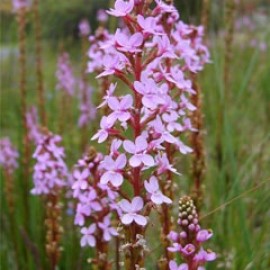
From a basal rosette of radiating, long, thin, prostrate pointed leaves arises a strong stem holding attractive pink flowers. “Trigger plants” are so called because of these unique flowers which are triggered by pollinating insects. The trigger stays cocked until an insect probes the flower, but it then springs upwards and deposits pollen onto the head or back of the insect, which then flies off to pollinate another flower!
Sowing advice:
For best results, sow seeds in good light at any time onto a good soil-based compost. Cover the seeds with fine grit or compost to approximately their own depth. We recommend germinating at 15 to 20 degrees C. Seeds should ideally germinate in between 2 and 6 weeks although they make take considerably longer. Pot on seedlings before finally planting out into a container or a well-drained spot.
Cultivation:
Stylidium graminifolium is one of the few Stylidium species commercially available for sale as seed. This species, along with six other trigger plants, was tested for horticultural value and cold hardiness by Douglas Danowski in the United States from 2000 to 2002. Dr. Danowski’s study concluded that S. graminifolium was able to survive cold temperatures down to -10°C, making it suitable for growing outside in as low as USDA hardiness zone 8. Danowski also postulated that S. graminifolium’s attractive floral spikes could be of use in floriculture and could be used to replace purple loosestrife in winter and spring arrangements. It has a relatively long flowering period and has somewhat specific conditions for germination, including smoke treatments and higher temperatures to simulate a bushfire, though germination can occur without these conditions. These germination requirements reduce the risk that it will become an invasive species. It is also able to grow on nutrient-poor soils and withstand significant drought. These attributes increase its potential for floricultural use.
There are two cultivars of S. graminifolium, Tiny Trina and Little Sapphire, that are tentatively recognized cultivar names by the Royal Horticultural Society. The epithet Little Sapphire is derived from the bright blue foliage that distinguishes this cultivar from the type species. Tiny Trina has a deeper flower color and leaves that are a darker shade of green with varying leaf blade widths. It also begins to flower later in the season.