
code: 941
A priceless mid and late summer plant
Family: Lamiaceae
Plant Classification: Hardy perennial
Minimum Height: 45 cm
Maximum Height: 60 cm
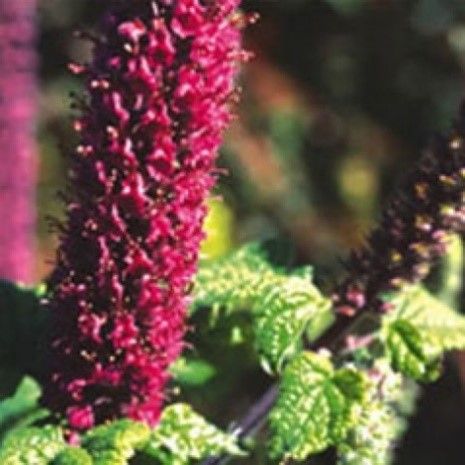
The only one Graham Stuart Thomas cares to describe and what a beauty it is! A priceless mid and late summer plant, with crowded spikes of deep purplish-red flowers above a low bush of aromatic sage-like growth.
Sowing advice:
For best results, sow seeds immediately onto a good soil-based compost. Cover the seeds with fine grit or compost to approximately their own depth. They can be sown at any time, and germination can sometimes be quicker if kept at 15 to 20 degrees C. However, we sow most seeds in an unheated greenhouse and wait for natural germination as many seeds have built-in dormancy mechanisms, and often wait for spring before emerging regardless of when they are sown. But spring sowing will obviously give them a full season of growth if successful germination occurs.
Cultivation:
The plants will grow in a shady position, near to trees or in a position with morning sun only but are denser and more free-flowering in full sun. They prefer well drained chalky soils, even limestone but will grow in damp soil so long as it is not waterlogged. They have a minimum nutrient requirements and do not need fertilising.
Although the plant is a deciduous perennial, in cold winters they will die back and re-emerge again in spring, but in areas where the winter is not too severe the plants will remain almost evergreen and flower a little earlier the next year. The bloom time varies somewhat with the weather, starting earlier in warmer zones and sometimes flowering later in cooler ones
Like most perennials that are easy to grow from seed, Caucasian germander also self-sows where happy. If new seedlings are not required, deadhead the spent flower spikes and cut the plants back after blooming. This will eliminate their winter presence but minimise self-sowing. Older plants can be divided in autumn after the last bloom has faded.
Cut Flowers:
Cut when the flowers are beginning to open but before the oldest flowers on the stem start to show signs of browning.
To dry, hang upside down in a warm (not hot) place with good air circulation. Drying too fast at high temps can cause browning, but drying too slowly may result in colour loss on the stems and leaves and give a less fresh appearance.
Garden Uses:
Natural garden, Woodland edge, Bees and Butterflies. Flower Arranging. Dry or Gravel Garden. Generally too tall for the rock garden.
Origin:
Native to the Caucasus Mountains and Iran, Turkey and Transcaucasia, in damp, rocky, shady habitats. It can be found on calcareous mountains and dry rocky slopes.
Nomenclature:
The genus is named by Dioscorides for Teucer, an ancient king of Troy, who was the first to discover the medicinal properties.
The species name means ‘of or from Hyrcania’ (Hircania), an ancient Persian region near present-day Iran. It is also spelled hircanicum
Pronounced hyr-KAY-nih-kum two-cree-um, it is commonly called the Caucasian or Caucasus Germander, Iranian Wood Sage and Iranian Germander.