code: 1033
Description
One of the best low-growing ground covers, Thymus serpyllum (Creeping Thyme) forms evergreen, dense cushions. Its stems creep along the ground instead of growing upright and can reach up to 30 cm (12 in) in length. The leaves are very small but dense, creating a lush mat of foliage.
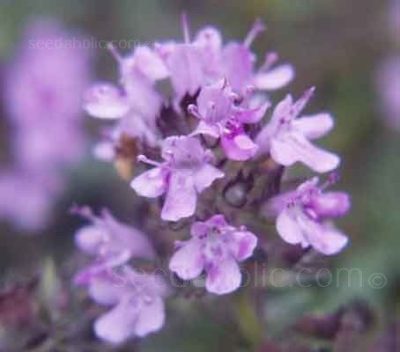
From May to August, Creeping Thyme blooms profusely with clusters of purple-violet flowers, often covering the foliage so completely that the evergreen leaves are barely visible.
Few ground covers can be walked on, but Creeping Thyme is one of them. It is an excellent alternative to a lawn in small areas, and ideal for planting between stepping stones, near patios, or along walkways. This hardy plant tolerates temperatures down to –34 °C (–30 °F), is drought-resistant, requires little maintenance, and releases a lovely fragrance when stepped on.
Because of its low growth habit, Creeping Thyme works beautifully in the foreground of garden beds, in borders as a filler between taller plants, or cascading over rockeries and walls. It does not spread aggressively, is easy to maintain, and tolerates many soil types—including heavy clay. Its leaves can be used as a culinary herb, and the flowers attract bees and butterflies, making it a versatile addition to any garden.
Organic Seed
This seed has been organically produced. It comes from plants grown according to recognized organic standards, without the use of chemicals. No treatments have been applied before or after harvest. The seed is supplied in its natural state, certified and labelled with the official organic symbol.
Sowing Instructions
General
Sow in spring or autumn at around 13 °C (55 °F).
Seeds can be sown indoors (late winter to spring, or autumn) or sown directly outdoors between May and August.
Indoors
Sow seeds on the surface of lightly firmed, moist seed compost in pots or trays.
Do not cover, as light is required for germination.
Cover the container with glass or clear plastic and place it in diffused light.
Germination takes 15–30 days.
When large enough to handle, transplant seedlings into 7.5 cm (3 in) pots.
Gradually acclimatize to outdoor conditions for 10–15 days before planting out after frost.
For best results, provide well-drained soil in full sun.
Pinch back stem tips at transplanting to encourage bushier growth.
Space plants 30 cm (12 in) apart.
Direct Sowing
Prepare the soil by mixing in generous organic matter such as compost, peat moss, or processed manure (about 50% with existing soil).
Work the soil to a depth of 15–25 cm (6–10 in), removing weeds and stones.
Broadcast the fine seed (mixing with sand can help even distribution).
Press seeds lightly into the soil—do not cover.
Water well and keep moist during hot periods.
Once seedlings grow, thin to 30 cm (12 in) apart, replanting thinnings as needed.
Cultivation & Care
During the first year, regular weeding and mulching are needed. After establishment, the plants require very little care.
Fertilize lightly in late spring or early summer if desired.
Established plants can be divided in spring (March–May).
Avoid cutting back too hard; wait until new buds appear in spring, then trim just above them.
Creeping Thyme as a Lawn Alternative
Creeping Thyme makes an excellent alternative to grass lawns. It tolerates foot traffic, requires no mowing, and releases a pleasant fragrance when walked upon. A thyme lawn only needs occasional weeding. For extra effect, planting thyme with Chamomile creates a fragrant ground cover that releases a fresh lemon scent when crushed underfoot.
Other Uses
- Source of oil of Serpolet (traditional herbal medicine).
- Culinary herb: used in meat dishes (e.g., beef stews), salads, and vegetables.
- Leaves can be dried for herbal teas (thyme tea with honey soothes coughs and sore throats).
- Companion plant for cabbages (repels cabbage worms).
- Dried flowers repel moths from clothing.
- Used in perfumery and cosmetics (essence of thyme).
Origin & Species
Native to central and southern Europe, Thyme is cultivated worldwide where climate permits. The plant is rich in essential oils and highly aromatic.
There are over 100 species of thyme. The most common types are:
Common Thyme (Thymus vulgaris): popular culinary herb, taller than creeping varieties, not walkable.
Creeping Thyme (Thymus serpyllum): low, spreading, walkable, ideal as ground cover.
Nomenclature
The genus name Thymus comes from the Greek word thymos (thyme), while phyllon means “leaf,” referring to the herb’s foliage. Its common name, Creeping Thyme, highlights its low, spreading growth habit.