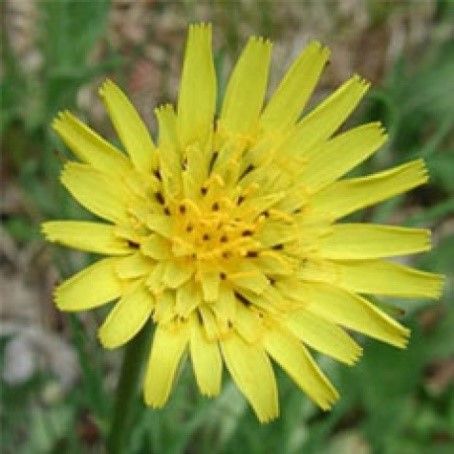
Ornamental plants

« Ornamental Plants »

Definition of Ornamental Plants:
Plants grow all over the world in different sizes, shapes and appearance. Some provides us with food, shelter or building materials, while others provide us with only visual delight. Ornamental Plants are also referred to as garden plants has beauty as its main trait. They are usually grown in the flower garden for the display of their flowers.It is a plant primarily grown for its beauty either for screening,accent, specimen, color or aesthetic reasons. Common ornamental features include leaves, scent, fruit, stem and bark.

History of Ornamental Plants:
The history of ornamental gardening started at least 4,000 years of human civilization.Egyptian tomb paintings of the 1500 BC are some of the earliest physical evidence of ornamental horticulture and landscape design.It depicts depict lotus ponds surrounded by symmetrical rows of acacias and palms.
Ornamentals, in horticulture, include both woody and herbaceous plants used primarily as amenities.

Important countries producing and consuming flowers and plants:
1- Netherlands 2- Italy 3- Germany 4- Switzerland 5- Denmark 6- Belgium 7- Sweden 8- Japan 9 – England 10- Australia 11- France 12- Spain 13- USA
As can be seen, the Netherlands ranks first among all countries and the rest of the countries are next.

In terms of consumption position, ornamental flowers are divided into three categories:
Annual Plants:
Ornamental plants used as flowers in the green space. These plants are usually not cold tolerant and have a relatively short life span. Like petunia and sage.

Perennial Plants:
Plants that can grow in the open for more than a year. Such as: chrysanthemums and permanent lilies.

INDOOR PLANTS:
Plants that can be stored only in the limited space of apartments and greenhouses. Like fig leaves and photos.

The effect of flowers and plants on the human psyche:
Research shows that buying flowers, planting flowers and plants, and looking at flowers in general evoke feelings of happiness, peace and freshness, positive thinking, and avoidance of sadness.

The color of the flowers is very important. Flowers with soft colors such as pink, white and purple, lead a person to calm emotions, and flowers with warm and bright colors such as red, yellow and orange, move the human sense to excitement and vitality.

The Canadian Ornamental Plants:
The Canadian Ornamental Plant Foundation was chartered by the federal government in 1964 to promote selection, testing and distribution of better ornamental plant cultivars. The procedures have provided breeders of new cultivars with the means of getting worthwhile new introductions into trade and, thence, to the general public. Much research into the development of cold-hardy plants takes place at Agriculture Canada Research Stations across the country. Successes include a cultivar of Alstroemeria, a member of the amaryllis family, developed at the Saanichton Research and Plant Quarantine Station, BC; Northline (a silver maple), Autumn Blaze (a white ash), Wascana (a hybrid linden) and Baron (a box elder), all developed at the Morden Research Station, Manitoba, for prairie use; and 2 new winter-hardy rose cultivars (Charles Albanel and Champlain), developed at the Ottawa Research Station.

Amsonia Orientalis

Amsonia Orientalis

Code: 1012 Amsonia orientalis ‘Eastern Blue Star’ seeds produce one of the most desirable blue perennials for modern gardens. This rarely-seen, clump-forming plant from Greece and Asia Minor features star-shaped, rich blue flowers held above narrow, lance-shaped foliage. Larger and longer-lasting than many similar varieties, it’s perfect for sunny or lightly shaded borders. Forming neat […]

Amsonia Orientalis Read More »

Lathyrus Vernus Flaccidus

Lathyrus Vernus – Spring Vetchling

Code: 1011 Lathyrus vernus ‘Spring Vetchling’ seeds offer a rare and elegant form of the classic spring vetchling. Unlike the typical simple leaflets, this selection has finely divided, fern-like foliage with wavy tendrils, creating a delicate, almost ethereal texture. The plant resembles a miniature bushy sweet pea, ideal for woodland gardens, shady borders, and naturalistic

Lathyrus Vernus – Spring Vetchling Read More »

Tragopogon Pratensis

Tragopogon Pratensis

code: 1010 Hardy perennial for meadows, wildlife and naturalistic 2025 gardens Tragopogon pratensis meadow salsify seeds give you one of the most characterful wildflower-style perennials you can grow. “Meadow salsify” is also known as showy goat’s beard or Jack-go-to-bed-at-noon, a name that comes from its unusual habit: the small yellow flowers open in the morning

Tragopogon Pratensis Read More »

Penstemon Euglaucus

Penstemon Euglaucus

code: 1008 grows on dry forested slopes on the Western coast of the USA Family: Scrophulariaceae Plant Classification: Hardy perennial Minimum Height: 38 cm Maximum Height: 45 cm The “Glaucous Beardtongue” grows on dry forested slopes on the Western coast of the USA, where it covers the ground with low, glaucous-leaved hummocks bearing true-blue, yellow-bearded

Penstemon Euglaucus Read More »

Moraea Vegata

Moraea Vegata

code: 999 One of the most versatile plants around Family: Iridaceae Plant Classification: Hardy bulb Hardy perennial Minimum Height: 40 cm Maximum Height: 50 cm In late spring flowers of matt yellow-brown are suffused with blue and purple, the falls having a yellow spotted basal patch. One of the most versatile plants around, this African

Moraea Vegata Read More »

Musa Paradisiaca

Musa Paradisiaca

code: 998 These plants were wild collected in India Family: Musaceae Common name: COMMON BANANA Plant Classification: Greenhouse perennial Minimum Height: 3.0 meters Maximum Height: 9.0 meters Packet Content(approx.): 6 Seeds of the common or ‘wild’ banana. These plants were wild collected in India and will produce vigorous plant that can grow up to 30

Musa Paradisiaca Read More »

Penstemon 'Sunburst Ruby'

Penstemon ‘Sunburst Ruby’

code: 997 long-flowering plant Family: Scrophulariaceae Plant Classification: Hardy perennial Minimum Height: 30 cm Maximum Height: 45 cm A new and completely hardy, long-flowering plant, which produces from early summer into late autumn a seemingly endless succession of white throated, bright red flowers. Sowing advice: For best results, sow seeds immediately onto a good soil-based

Penstemon ‘Sunburst Ruby’ Read More »

Scilla Autumnalis

Scilla Autumnalis

code: 994 Rare in the UK Family: Asparagaceae Common name: Prospero autumnale, Autumn-flowering squill, Starry hyacinth, Winter hyacinth Plant Classification: Hardy perennial Minimum Height: 25 cm Maximum Height: 30 cm Packet Content(approx.): 12 Dense racemes of purple-blue flowers appear very suddenly in late summer and early autumn, before the linear leaves. One day it is

Scilla Autumnalis Read More »

Euphorbia Amygdaloides Purpurea

Euphorbia Amygdaloides Purpurea

code: 973 A slow-growing gem of the euphorbia family Family: Euphorbiaceae Common name: Purple Wood Spurge Plant Classification: Hardy perennial Minimum Height: 40 cm Maximum Height: 50 cm Packet Content(approx.): 5 This beauty makes beetroot-coloured spring foliage, an attractive contrast with the golden yellow “flower heads”. A slow-growing gem of the euphorbia family, that spreads

Euphorbia Amygdaloides Purpurea Read More »

Euphorbia Oblongata

Euphorbia Oblongata

code: 970 It is synonymous or very similar to Euphorbia Corallioides Family: Euphorbiaceae Common name: Syn. Euphorbia Corallioides palustris zauberflote. Eggleaf spurge. Oblong spurge. Plant Classification: Hardy perennial Minimum Height: 45 cm Maximum Height: 60 cm Packet Content(approx.): 20 Too rarely seen or grown, the “Coral Spurge” a non-running clump former, has dazzling yellow flowers

Euphorbia Oblongata Read More »

Geranium Robustum

Geranium Robustum

code: 968 For sheer flower-power it is hard to beat Family: Geraniaceae Plant Classification: Hardy perennial Minimum Height: 45 cm Maximum Height: 60 cm Packet Content(approx.): 10+ Spreading mounds of finely cut silvery-grey foliage are smothered with successive flushes of large purple-pink flowers on this superb South African plant. Gets cut to the ground each

Geranium Robustum Read More »