Ornamental plants

« Ornamental Plants »

Definition of Ornamental Plants:
Plants grow all over the world in different sizes, shapes and appearance. Some provides us with food, shelter or building materials, while others provide us with only visual delight. Ornamental Plants are also referred to as garden plants has beauty as its main trait. They are usually grown in the flower garden for the display of their flowers.It is a plant primarily grown for its beauty either for screening,accent, specimen, color or aesthetic reasons. Common ornamental features include leaves, scent, fruit, stem and bark.

History of Ornamental Plants:
The history of ornamental gardening started at least 4,000 years of human civilization.Egyptian tomb paintings of the 1500 BC are some of the earliest physical evidence of ornamental horticulture and landscape design.It depicts depict lotus ponds surrounded by symmetrical rows of acacias and palms.
Ornamentals, in horticulture, include both woody and herbaceous plants used primarily as amenities.

Important countries producing and consuming flowers and plants:
1- Netherlands 2- Italy 3- Germany 4- Switzerland 5- Denmark 6- Belgium 7- Sweden 8- Japan 9 – England 10- Australia 11- France 12- Spain 13- USA
As can be seen, the Netherlands ranks first among all countries and the rest of the countries are next.

In terms of consumption position, ornamental flowers are divided into three categories:
Annual Plants:
Ornamental plants used as flowers in the green space. These plants are usually not cold tolerant and have a relatively short life span. Like petunia and sage.

Perennial Plants:
Plants that can grow in the open for more than a year. Such as: chrysanthemums and permanent lilies.

INDOOR PLANTS:
Plants that can be stored only in the limited space of apartments and greenhouses. Like fig leaves and photos.

The effect of flowers and plants on the human psyche:
Research shows that buying flowers, planting flowers and plants, and looking at flowers in general evoke feelings of happiness, peace and freshness, positive thinking, and avoidance of sadness.

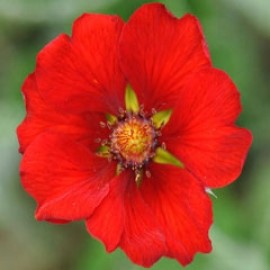
The color of the flowers is very important. Flowers with soft colors such as pink, white and purple, lead a person to calm emotions, and flowers with warm and bright colors such as red, yellow and orange, move the human sense to excitement and vitality.

The Canadian Ornamental Plants:
The Canadian Ornamental Plant Foundation was chartered by the federal government in 1964 to promote selection, testing and distribution of better ornamental plant cultivars. The procedures have provided breeders of new cultivars with the means of getting worthwhile new introductions into trade and, thence, to the general public. Much research into the development of cold-hardy plants takes place at Agriculture Canada Research Stations across the country. Successes include a cultivar of Alstroemeria, a member of the amaryllis family, developed at the Saanichton Research and Plant Quarantine Station, BC; Northline (a silver maple), Autumn Blaze (a white ash), Wascana (a hybrid linden) and Baron (a box elder), all developed at the Morden Research Station, Manitoba, for prairie use; and 2 new winter-hardy rose cultivars (Charles Albanel and Champlain), developed at the Ottawa Research Station.

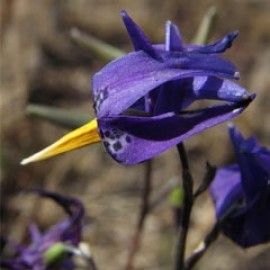
Conanthera Bifolia

Conanthera Bifolia

code: 672 It will be best grown in a very gritty soil Family: Tecophiliaceae Plant Classification: Half hardy bulb Hardy bulb Half hardy perennial Hardy perennial Minimum Height: 15 cm Maximum Height: 23 cm Packet Content(approx.): 10 A new, rare and exquisite relative of tecophilaea the “Chilean Crocus”, from the Andes and very rarely available.

Conanthera Bifolia Read More »

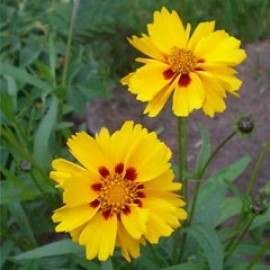
Coreopsis Grandiflora 'Badengold'

Coreopsis Grandiflora ‘Badengold’

code: 971 clump-forming plant has leaves which are simple and lance-shaped Family: Compositae Common name: Maiden’s Eye Plant Classification: Hardy perennial Maximum Height: 90 cm A popular cottage garden plant bearing red-eyed, brightest yellow, single flower heads, up to 2.5 inches across, consisting of ray florets with uneven cut margins, and orange disk florets. This

Coreopsis Grandiflora ‘Badengold’ Read More »

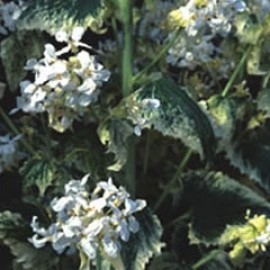
Lunaria Annua Alba Variegata

Lunaria Annua Alba Variegata

code: 668 seedlings will be all green when young but variegate later Family: Cruciferae Common name: Honesty ‘Alba Variegata’ Plant Classification: Hardy biennial Minimum Height: 60 cm Maximum Height: 90 cm Packet Content(approx.): 10 This lovely spring-flowering plant is the much sought after, but seldom offered, white flowered and white-splashed foliage form of “Honesty”. When

Lunaria Annua Alba Variegata Read More »

Silene Schafta

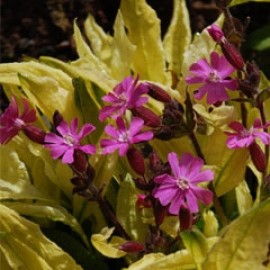
code: 665 This is one of the most popular plants for a rockery Family: CARYOPHYLLACEAE Plant Classification: Hardy perennial Minimum Height: 15 cm Maximum Height: 20 cm A long-lived dwarf forming a neat tuft of bright green pointed leaves, covered in late summer and into autumn with bright magenta flowers with deeply cut petals. This

Silene Schafta Read More »

Silene Viridiflora

Silene Viridiflora

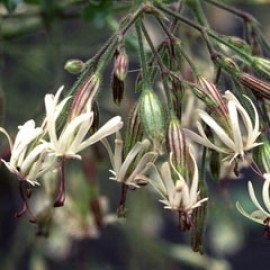
code: 664 swarm of small greenish-cream flowers Family: Caryophlaceae Plant Classification: Hardy perennial Minimum Height: 45 cm Maximum Height: 60 cm A striking plant producing a swarm of small greenish-cream flowers which have curiously swept-back petals growing thickly over a mass of thin, continuously branching, sticky stems. From a distance, much resembles the gypsophila so

Silene Viridiflora Read More »

Spodiopogon Sibiricus

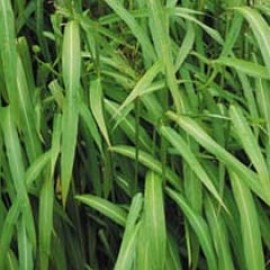
code: 662 “Greybeard grass” Family: Poaceae Common name: Greybeard Grass, Frost Grass, Silver Spikegrass Plant Classification: Hardy perennial Minimum Height: 90 cm Maximum Height: 1.2 meters A very decorative grass with many names including “Greybeard grass”, “Frost Grass”, and “Silver Spike grass”. Stiff, white-centred broad leaves, turn burgundy in autumn, and plumes of purple spikelet’s

Spodiopogon Sibiricus Read More »

Polygonatum Verticillatum

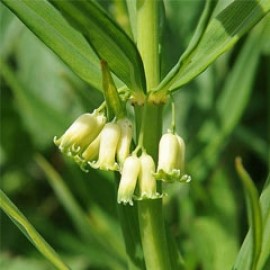
code: 661 slowly-expanding plant that every gardener should possess Family: Asparagaceae Common name: Whorled Solomon’s-seal Plant Classification: Hardy perennial Minimum Height: 45 cm Maximum Height: 60 cm Packet Content(approx.): 8 In spring many strong curving stems clad in thin pointed leaves upwards, and hold all along their ends numerous, small, dangling, greenish-white, fragrant bells with

Polygonatum Verticillatum Read More »

Polyxena Longituba

Polyxena Longituba

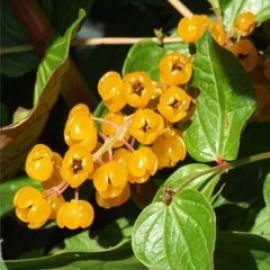
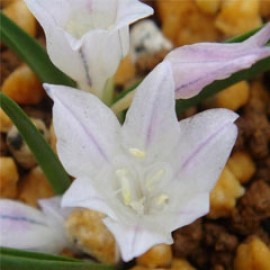
code: 660 This rarely-seen native of the Roggeveld in South Africa Family: Hyacinthaceae Common name: Lachenalia longituba Plant Classification: Half hardy bulb Hardy bulb Half hardy perennial Hardy perennial Delicate ice-blue flowers with short stalks and a very long tube, have a violet central stripe on each petal, and arise from a central rosette of

Polyxena Longituba Read More »

Potentilla Gracilis

Potentilla Gracilis

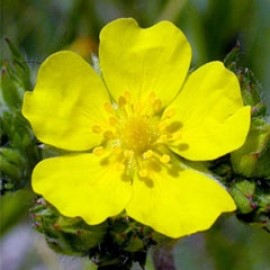
code: 657 occurs in odd locations across North America Family: Rosaceae Common name: Slender Cinquefoil, Graceful Cinquefoil, Potentilla gracilis var. elmeri Jeps. Combleaf Cinquefoil Plant Classification: Hardy perennial Minimum Height: 30 cm Maximum Height: 40 cm Solid rosettes of large leaves, with typical strawberry-like foliage, carry sprays of golden yellow flowers in spring and early

Potentilla Gracilis Read More »

Primula Firmipes

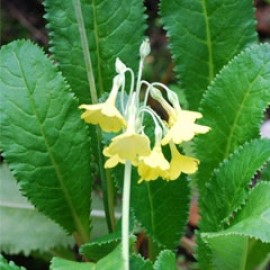
code: 655 It is native to the border area linking Tibet Family: Primulaceae Plant Classification: Hardy perennial Maximum Height: 20 cm This smallest member of the Sikkimense section has soft yellow flowers held in loose heads on stems covered in yellow farina. The leaves are attractively serrated and veined, giving it the best foliage of

Primula Firmipes Read More »

Primula Florindae

Primula Florindae

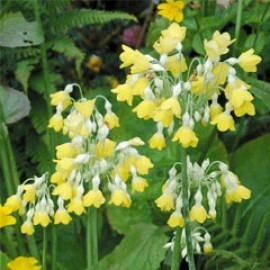
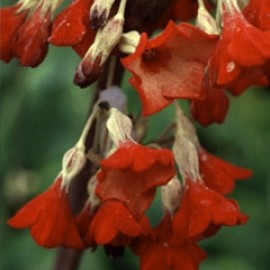
code: 654 self-seeding clumps! Family: Primulaceae Plant Classification: Hardy perennial Minimum Height: 60 cm Maximum Height: 90 cm The “Giant Himalayan Cowslip” bears large rounded leaves and stout stems carrying immense heads of fragrant flowers which are usually yellow but very occasionally red or orange. This is almost certainly the biggest primula there is and

Primula Florindae Read More »