Ornamental plants

« Ornamental Plants »

Definition of Ornamental Plants:
Plants grow all over the world in different sizes, shapes and appearance. Some provides us with food, shelter or building materials, while others provide us with only visual delight. Ornamental Plants are also referred to as garden plants has beauty as its main trait. They are usually grown in the flower garden for the display of their flowers.It is a plant primarily grown for its beauty either for screening,accent, specimen, color or aesthetic reasons. Common ornamental features include leaves, scent, fruit, stem and bark.

History of Ornamental Plants:
The history of ornamental gardening started at least 4,000 years of human civilization.Egyptian tomb paintings of the 1500 BC are some of the earliest physical evidence of ornamental horticulture and landscape design.It depicts depict lotus ponds surrounded by symmetrical rows of acacias and palms.
Ornamentals, in horticulture, include both woody and herbaceous plants used primarily as amenities.

Important countries producing and consuming flowers and plants:
1- Netherlands 2- Italy 3- Germany 4- Switzerland 5- Denmark 6- Belgium 7- Sweden 8- Japan 9 – England 10- Australia 11- France 12- Spain 13- USA
As can be seen, the Netherlands ranks first among all countries and the rest of the countries are next.

In terms of consumption position, ornamental flowers are divided into three categories:
Annual Plants:
Ornamental plants used as flowers in the green space. These plants are usually not cold tolerant and have a relatively short life span. Like petunia and sage.

Perennial Plants:
Plants that can grow in the open for more than a year. Such as: chrysanthemums and permanent lilies.

INDOOR PLANTS:
Plants that can be stored only in the limited space of apartments and greenhouses. Like fig leaves and photos.

The effect of flowers and plants on the human psyche:
Research shows that buying flowers, planting flowers and plants, and looking at flowers in general evoke feelings of happiness, peace and freshness, positive thinking, and avoidance of sadness.

The color of the flowers is very important. Flowers with soft colors such as pink, white and purple, lead a person to calm emotions, and flowers with warm and bright colors such as red, yellow and orange, move the human sense to excitement and vitality.

The Canadian Ornamental Plants:
The Canadian Ornamental Plant Foundation was chartered by the federal government in 1964 to promote selection, testing and distribution of better ornamental plant cultivars. The procedures have provided breeders of new cultivars with the means of getting worthwhile new introductions into trade and, thence, to the general public. Much research into the development of cold-hardy plants takes place at Agriculture Canada Research Stations across the country. Successes include a cultivar of Alstroemeria, a member of the amaryllis family, developed at the Saanichton Research and Plant Quarantine Station, BC; Northline (a silver maple), Autumn Blaze (a white ash), Wascana (a hybrid linden) and Baron (a box elder), all developed at the Morden Research Station, Manitoba, for prairie use; and 2 new winter-hardy rose cultivars (Charles Albanel and Champlain), developed at the Ottawa Research Station.

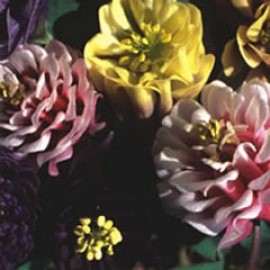
Aquilegia ‘Pom-Poms Mixed’

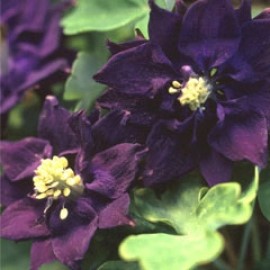
code: 647 A generous packet holding all of our range Family: Ranunculaceae Common name: Granny’s Bonnets Plant Classification: Hardy perennial Minimum Height: 60 cm Maximum Height: 90 cm Recovered from past times, these popular Victorian short-spurred or spurless flowers have several tiers of petals producing a unique doubling, tripling or pom-pom effect. A generous packet […]

Aquilegia ‘Pom-Poms Mixed’ Read More »

Aquilegia Pyrenaica

Aquilegia Pyrenaica

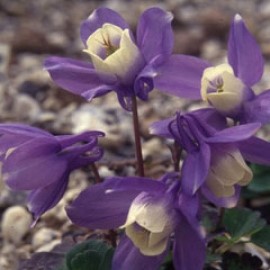
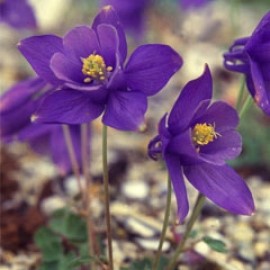
code: 646 with deep purple-blue flowers in July and August Family: Ranunculaceae Common name: Pyrenees Columbine, Granny’s bonnet, Plant Classification: Hardy perennial Minimum Height: 15 cm Maximum Height: 30 cm Related to Aquilegia alpina, but distinctly shorter, with deep purple-blue flowers in July and August, this gem is quite suitable for the rock garden. In

Aquilegia Pyrenaica Read More »

Aquilegia Saximontana

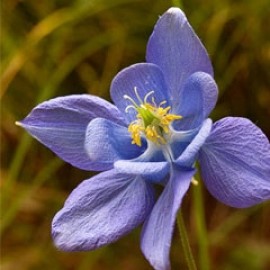
code: 644 Superb on a rockery or in a container Family: Ranunculaceae Common name: Rocky Mountain Blue Columbine, Granny’s Bonnets Plant Classification: Hardy perennial Minimum Height: 8 cm Maximum Height: 10 cm Packet Content(approx.): 20 A choice and absolutely exquisite dwarf columbine bearing disproportionately large blue and white flowers on short stems on very compact,

Aquilegia Saximontana Read More »

Corydalis Wilsonii

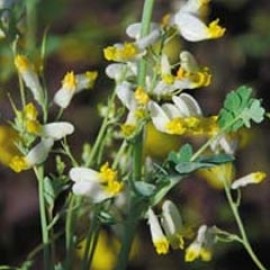
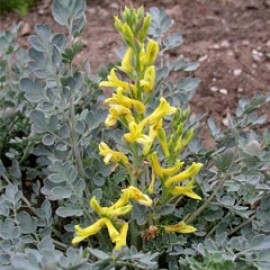
code: 640 it grows best in a well drained soil Plant Classification: Hardy perennial Minimum Height: 23 cm Maximum Height: 38 cm Packet Content(approx.): 20+ This lovely plant displays compact sprays of rich butter-yellow flowers held close to the rosette of finely-divided, glaucous leaves. Although it is an alpine plant, and can easily withstand minus

Corydalis Wilsonii Read More »

Crambe Maritima

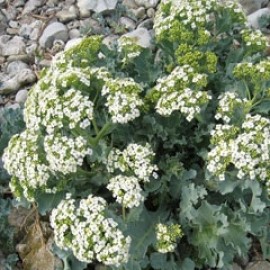
code: 639 It is superb in the border Family: Cruciferae Common name: Sea Kale Plant Classification: Hardy perennial Maximum Height: 40 cm Packet Content(approx.): 12 Purple spring shoots enlarge into glorious glaucous rubbery leaves then massed heads of honey-scented, ivory flowers open in June. It is superb in the border and is ideal for cutting.

Crambe Maritima Read More »

Crataegus Monogyna

Crataegus Monogyna

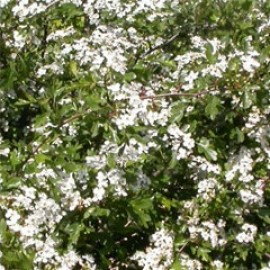
code: 638 In Autumn, the bushes are heavily laden with bright red fleshy berries Family: Rosaceae Common name: Hawthorn, May, Mother die Plant Classification: Hardy shrub Minimum Height: 1.8 meters Maximum Height: 3.6 meters Packet Content(approx.): 8 large seeds One of the most distinctive features of the English countryside in spring is this sweet-smelling tree

Crataegus Monogyna Read More »

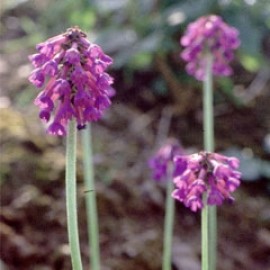
Primula Apoclita

code: 631 very high alpine pastures at 4000-4700m Family: Primulaceae Plant Classification: Hardy perennial Minimum Height: 15 cm Maximum Height: 25 cm This rare plant has compact heads of small, flared-tubular, purplish-blue, fragrant flowers on thin stems above rosettes of small, deeply wrinkled leaves. It comes from China, Yunnan and Sichuan, where it thrives in

Primula Apoclita Read More »

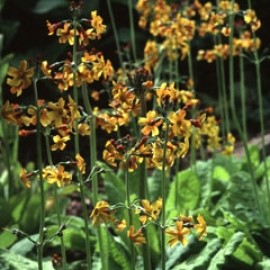
Primula Bulleyana

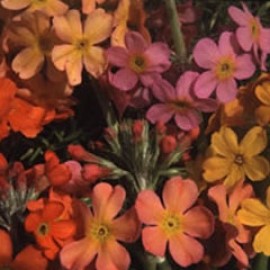
code: 630 It does especially well in waterside environments Family: Primulaceae Plant Classification: Hardy perennial Maximum Height: 45 cm This extremely vigorous and hardy candelabra primula thrusts up numerous strong stems bearing bright orange flowers with darker eyes. It does especially well in waterside environments where it will self-seed generously making fabulous clumps! Sowing advice:

Primula Bulleyana Read More »

Stocks Cinderella 'Silvery Blue'

Stocks Cinderella ‘Silvery Blue’

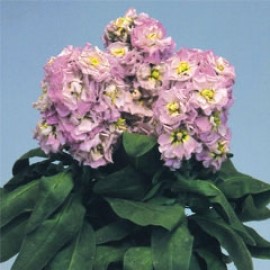
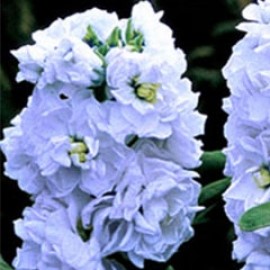
code: 624 These plants are selectable for 100% doubleness Family: Cruciferae Common name: Mathiola incana Plant Classification: Half hardy annual Minimum Height: 20 cm Maximum Height: 25 cm An extremely early and long-flowering variety with unique, silvery-blue flowers with a sweet and spicy scent on magnificent multiple spikes. These plants are selectable for 100% doubleness.

Stocks Cinderella ‘Silvery Blue’ Read More »

Arabis Koehleri

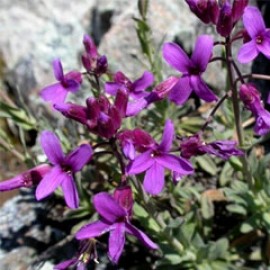
code: 613 Cruciform flowers of bright purple open on compact Family: Cruciferae Common name: Koehler’s Rock Cress Plant Classification: Hardy perennial Minimum Height: 10 cm Maximum Height: 20 cm This very rare, tough, tufted endemic lives only on a few dry hills, high above the rushing Umpqua River on the Pacific coast of Oregon. Cruciform

Arabis Koehleri Read More »

Aquilegia 'Woodside Blue'

Aquilegia ‘Woodside Blue’

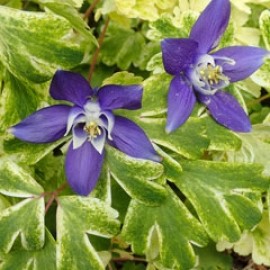
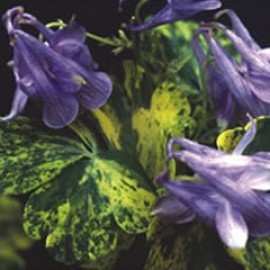
code: 612 sow seeds immediately onto a good soil-based compost Family: Ranunculaceae Common name: Woodside Blue Columbine, Granny’s Bonnets Plant Classification: Hardy perennial Maximum Height: 60 cm Deepest blue or violet flowers contrast vividly with the fabulously mottled leaves. Sowing advice: For best results, sow seeds immediately onto a good soil-based compost. Cover the seeds

Aquilegia ‘Woodside Blue’ Read More »