Ornamental plants

« Ornamental Plants »

Definition of Ornamental Plants:
Plants grow all over the world in different sizes, shapes and appearance. Some provides us with food, shelter or building materials, while others provide us with only visual delight. Ornamental Plants are also referred to as garden plants has beauty as its main trait. They are usually grown in the flower garden for the display of their flowers.It is a plant primarily grown for its beauty either for screening,accent, specimen, color or aesthetic reasons. Common ornamental features include leaves, scent, fruit, stem and bark.

History of Ornamental Plants:
The history of ornamental gardening started at least 4,000 years of human civilization.Egyptian tomb paintings of the 1500 BC are some of the earliest physical evidence of ornamental horticulture and landscape design.It depicts depict lotus ponds surrounded by symmetrical rows of acacias and palms.
Ornamentals, in horticulture, include both woody and herbaceous plants used primarily as amenities.

Important countries producing and consuming flowers and plants:
1- Netherlands 2- Italy 3- Germany 4- Switzerland 5- Denmark 6- Belgium 7- Sweden 8- Japan 9 – England 10- Australia 11- France 12- Spain 13- USA
As can be seen, the Netherlands ranks first among all countries and the rest of the countries are next.

In terms of consumption position, ornamental flowers are divided into three categories:
Annual Plants:
Ornamental plants used as flowers in the green space. These plants are usually not cold tolerant and have a relatively short life span. Like petunia and sage.

Perennial Plants:
Plants that can grow in the open for more than a year. Such as: chrysanthemums and permanent lilies.

INDOOR PLANTS:
Plants that can be stored only in the limited space of apartments and greenhouses. Like fig leaves and photos.

The effect of flowers and plants on the human psyche:
Research shows that buying flowers, planting flowers and plants, and looking at flowers in general evoke feelings of happiness, peace and freshness, positive thinking, and avoidance of sadness.

The color of the flowers is very important. Flowers with soft colors such as pink, white and purple, lead a person to calm emotions, and flowers with warm and bright colors such as red, yellow and orange, move the human sense to excitement and vitality.

The Canadian Ornamental Plants:
The Canadian Ornamental Plant Foundation was chartered by the federal government in 1964 to promote selection, testing and distribution of better ornamental plant cultivars. The procedures have provided breeders of new cultivars with the means of getting worthwhile new introductions into trade and, thence, to the general public. Much research into the development of cold-hardy plants takes place at Agriculture Canada Research Stations across the country. Successes include a cultivar of Alstroemeria, a member of the amaryllis family, developed at the Saanichton Research and Plant Quarantine Station, BC; Northline (a silver maple), Autumn Blaze (a white ash), Wascana (a hybrid linden) and Baron (a box elder), all developed at the Morden Research Station, Manitoba, for prairie use; and 2 new winter-hardy rose cultivars (Charles Albanel and Champlain), developed at the Ottawa Research Station.

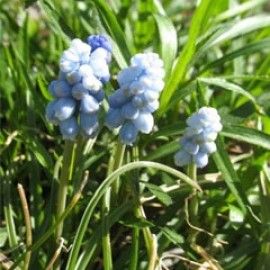
Muscari Armeniacum 'Valeries Finnis'

Muscari Armeniacum ‘Valeries Finnis’

code: 922 A lovely variety with pale Family: Asparagaceae Common name: Armenian Grape Hyacinth Plant Classification: Hardy perennial Minimum Height: 15 cm Maximum Height: 30 cm Packet Content(approx.): 15 A lovely variety with pale, powder-blue flowers with white rims flowering from March to April. Although this variety is reputed to be sterile, we received this […]

Muscari Armeniacum ‘Valeries Finnis’ Read More »

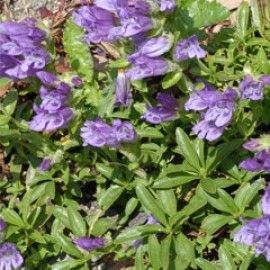
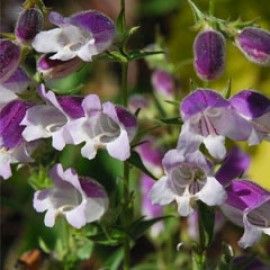
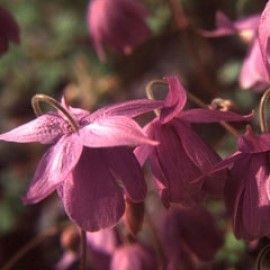
Penstemon Cardwellii

Penstemon Cardwellii

code: 920 purple-blue flowers open over a long period Family: Scrophulariaceae Common name: Cardwell’s Penstemon Plant Classification: Hardy perennial Minimum Height: 15 cm Maximum Height: 30 cm Amongst the easiest penstemons to grow, these plants form a dwarf evergreen shrub with long, oval, leathery leaves, which in the winter turn purplish. The relatively large, purple-blue

Penstemon Cardwellii Read More »

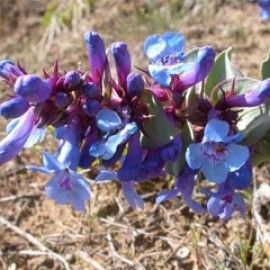
Penstemon Nitidus

Penstemon Nitidus

code: 918 One of the very choicest of all penstemons Family: Scrophulariaceae Common name: Smooth Blue Beard-Tongue, Wax leafed Penstemon Plant Classification: Hardy perennial Minimum Height: 15 cm Maximum Height: 25 cm Packet Content(approx.): 12 unusually-large seeds. One of the very choicest of all penstemons and a challenge to grow, this fabulous semi dwarf plant

Penstemon Nitidus Read More »

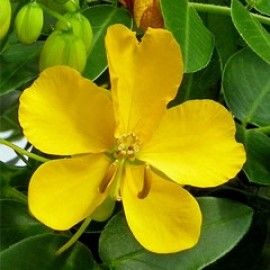
Senna Corymbosa

Senna Corymbosa

code: 914 It is cold-tolerant Family: Fabaceae Common name: Buttercup Bush, Adipera corymbosa, Cassia corymbosa, Cassia crassifolia, Cassia falcata, Chamaefistula corymbosa Plant Classification: Half hardy shrub Minimum Height: 1.0 meter Maximum Height: 3.0 meters Packet Content(approx.): 8 This attractive, fast-growing South American shrub bears racemes of bright yellow flowers on a bush which forms a

Senna Corymbosa Read More »

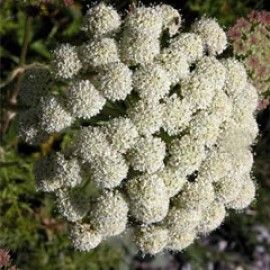
Seseli Libanotis

Seseli Libanotis

code: 913 This rare British native bears seriously large umbels of white flowers Family: Apiaceae Common name: Moon Carrot Plant Classification: Hardy perennial Maximum Height: 60 cm This rare British native bears seriously large umbels of white flowers, on pink-flushed stems throughout the summer, above very finely divided, almost carrot-like, dark green foliage. It is

Seseli Libanotis Read More »

Aralia Racemosa

Aralia Racemosa

code: 909 the leaflets being large and round with long, pointed tips Family: Araliaceae Common name: American spikenard, Life-of-man, Petty more Plant Classification: Hardy perennial Minimum Height: 90 cm Maximum Height: 1.8 meters Packet Content(approx.): 10 This tall, bushy plant, a member of the ginseng family from the United States and Canada, has large compound

Aralia Racemosa Read More »

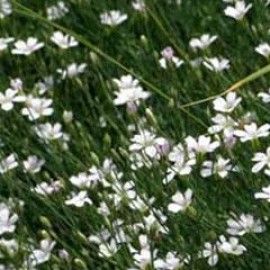
Arenaria Drypidea

Arenaria Drypidea

code: 908 This totally hardy alpine is native to high places Family: Caryophyllaceae Common name: Turkish Sandwort, Eremogone drypidea Plant Classification: Hardy perennial Maximum Height: 8 cm Sprays of white flowers open on thin stems over small cushions of blue-green, needle-like leaves. This totally hardy alpine is native to high places in western Asia including

Arenaria Drypidea Read More »

Chia Seeds

Chia Seeds

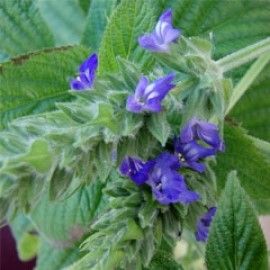
code: 905 It is claimed that they have ‘more omega-3 Family: Lamiaceae Plant Classification: Half hardy perennial Minimum Height: 50 cm Maximum Height: 70 cm One of the new ‘superfoods’ to arrive, Chia seeds are antioxidant rich, rather like Goji Berries. It is claimed that they have ‘more omega-3 and dietary fibre than any other

Chia Seeds Read More »

Digitalis Parviflora

Digitalis Parviflora

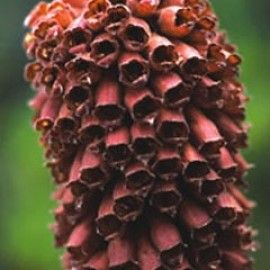
code: 903 This distinctive, striking… Family: Scrophulariaceae Common name: ‘Chocolate Soldier’ Plant Classification: Hardy perennial Maximum Height: 90 cm Slender spikes hold numerous densely massed chocolate brown tubular flowers. This distinctive, striking and lovely completely perennial plant is appropriately also called ‘Chocolate Soldier’. Sowing advice: For best results, sow seeds immediately onto a good soil-based

Digitalis Parviflora Read More »

Lilium Pardalinum

Lilium Pardalinum

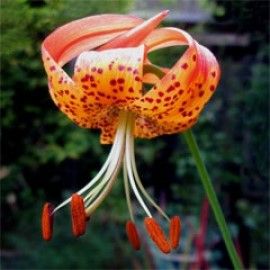
code: 900 It has gained the Royal Horticultural Society’s Award of Garden Merit Family: Liliaceae Common name: Leopard Lily, Panther Lily Plant Classification: Hardy bulb Minimum Height: 1.5 meters Maximum Height: 2.1 meters Packet Content(approx.): 8 This famous and robust lily forms clumps of erect stems bearing whorled leaves and several nodding, dark-spotted, orange-red flowers

Lilium Pardalinum Read More »

Ligularia Clivorum 'Desdemona'

Ligularia Clivorum ‘Desdemona’

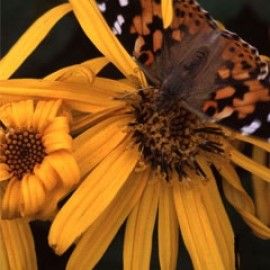
code: 899 This exceptional back-of-border Family: Asteraceae Common name: MIDNIGHT LADY Plant Classification: Hardy perennial Minimum Height: 80 cm Maximum Height: 1.2 meters Three inch wide, bright orange flowers on branching purple stems, stand above glossy, beetroot-coloured, heart-shaped leaves. This exceptional back-of-border or even bog plant attracts countless butterflies and moths, such as the Painted

Ligularia Clivorum ‘Desdemona’ Read More »